Tribal Tattoo Layouts: Placement, Flow and Getting the Culture Right
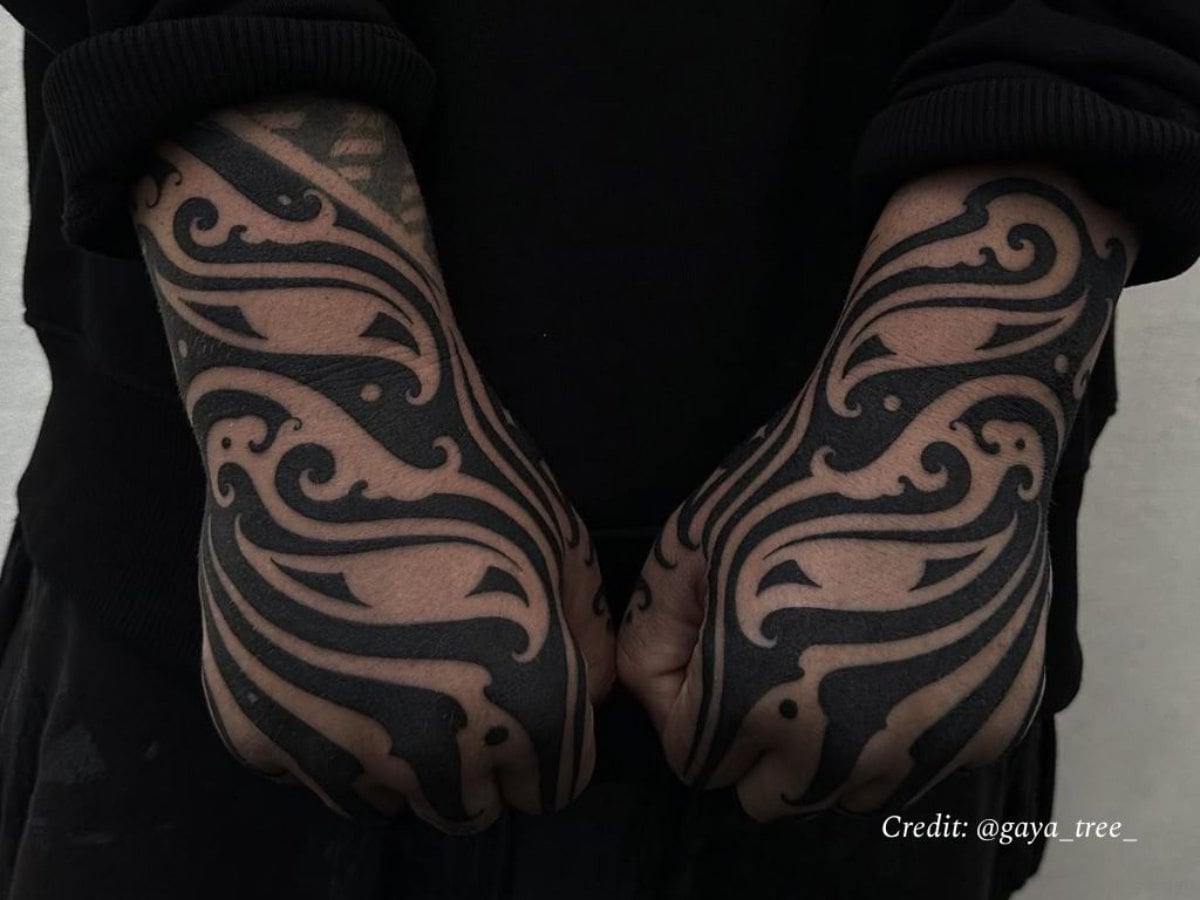
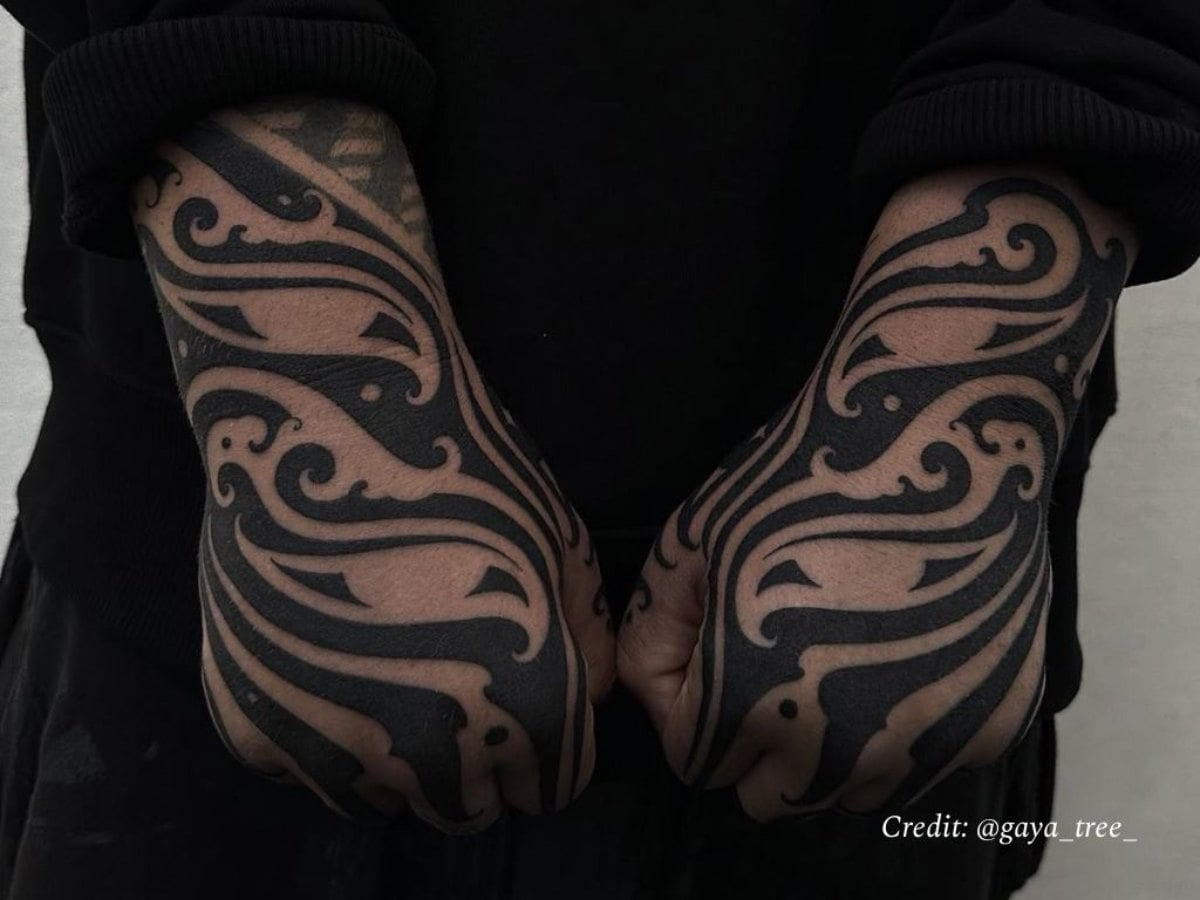
A tribal tattoo layout works when the black shapes follow the body’s muscles and the negative space between them is as deliberate as the ink. Get the flow right and a tribal piece looks like it grew on the body. Get it wrong and it looks like a sticker.
“Tribal” also covers two very different things: living cultural traditions with specific meanings and rules, and the modern tribal-inspired blackwork that grew out of them. This guide explains the difference, how to approach each respectfully, and how to lay out a tribal piece on the arm, chest, back and legs.
Cultural Tradition or Tribal-Inspired Design?
| Cultural traditions | Tribal-inspired blackwork | |
| Examples | Samoan tatau, Māori tā moko, Kalinga batok in the Philippines, Bornean Iban tattooing | Bold black curves, spikes and flowing abstract shapes |
| Meaning | Specific: lineage, status, rites of passage, community | Personal; chosen by the wearer |
| Who makes it | Often practitioners from that culture, sometimes by hand-tapping | Any skilled blackwork artist |
| Who wears it | Some designs are reserved for members of the culture, or for a particular gender or stage of life | Anyone |
A few examples show why the distinction matters. The Samoan pe’a (for men, covering the waist to the knees) and malu (for women, on the thighs) are rites of passage traditionally made by a master tattooist, not decorative leg layouts. Māori moko, especially on the face, carries genealogy and identity; Māori-inspired designs for people outside the culture are often called kirituhi, a term that exists precisely to keep the two apart.
A practical approach
- If you have heritage in a tradition, the most meaningful route is usually a practitioner from that culture, who can design within its rules.
- If you do not, choose tribal-inspired blackwork: bold shapes and flow without copying specific cultural motifs or patterns that carry lineage.
- Ask your artist where a design comes from. A good artist will tell you if a motif is borrowed from a specific tradition.
Modern tribal blackwork, the style most people picture when they hear “tribal tattoo”, was developed by Western tattooers in the late twentieth century, inspired by Pacific and Bornean designs. It is its own style now, and that is what this guide focuses on for layout.
Layout Principles
- Follow the muscle. Curves should run along the deltoid, the bicep, the pectoral or the calf, so the design moves with the body.
- Treat negative space as part of the design. The skin between black shapes carries as much of the pattern as the ink does.
- Taper toward the extremities. Shapes are widest over large muscles and narrow toward the wrist, elbow or ankle.
- Leave room to connect. Tribal pieces are often extended later, from shoulder to chest or arm to back. Plan where the next section could join.
Layouts by Placement
Arm and sleeve
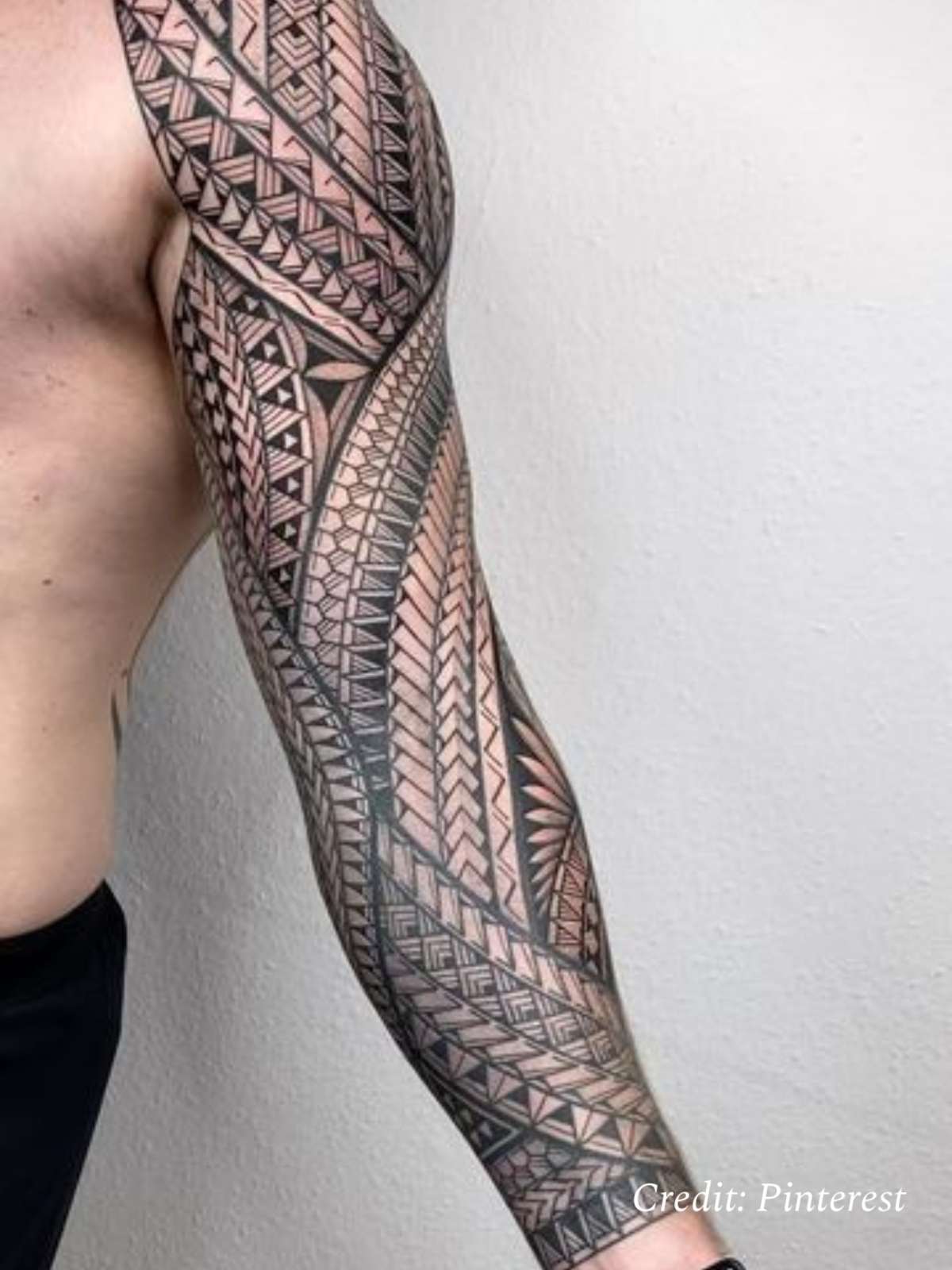
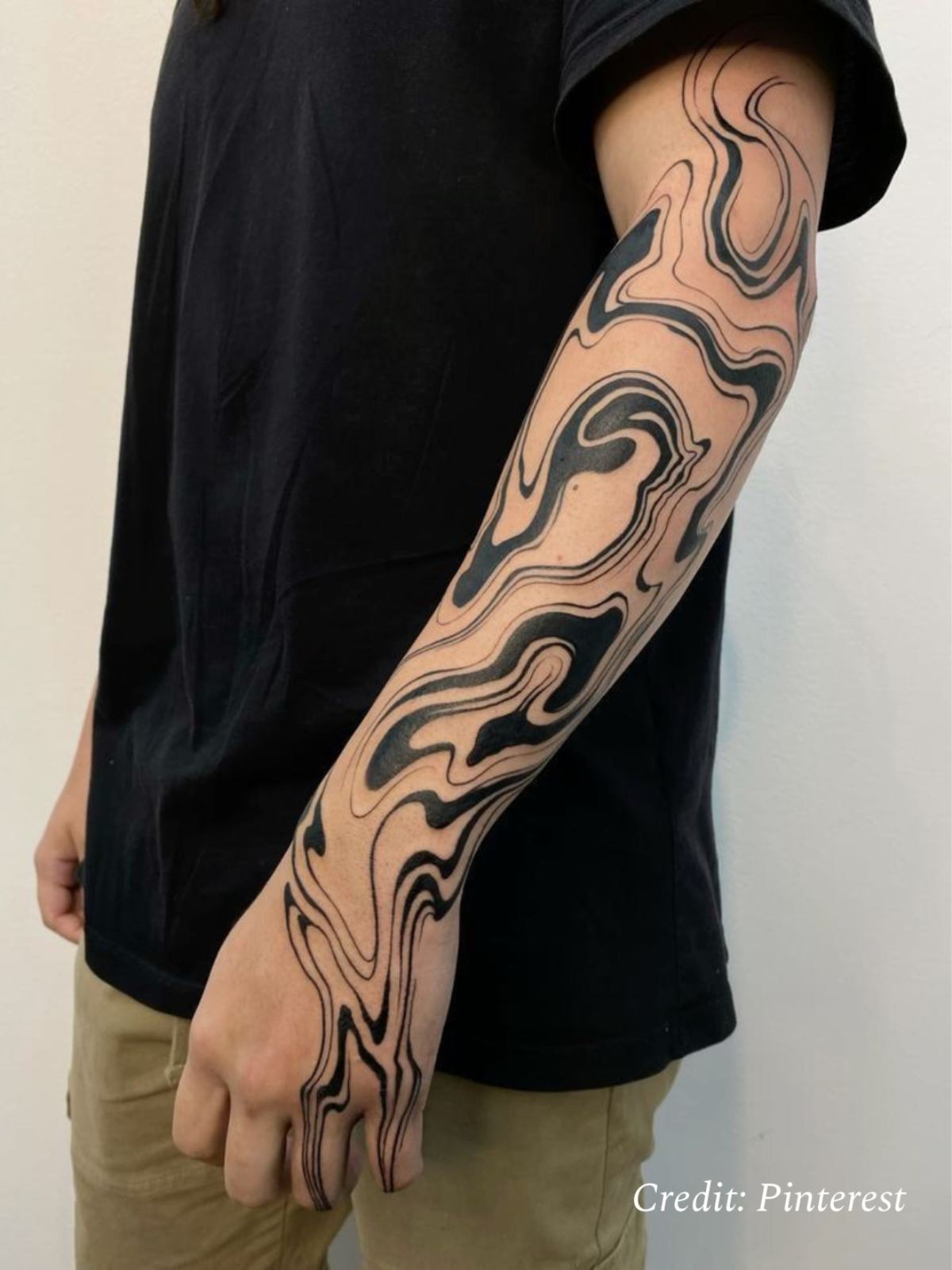
The most common tribal placement. Bands, spirals and spikes wrap the arm and follow the bicep and forearm. A half sleeve from shoulder to elbow is a natural starting point that can extend later. See large-scale work.
Shoulder and chest
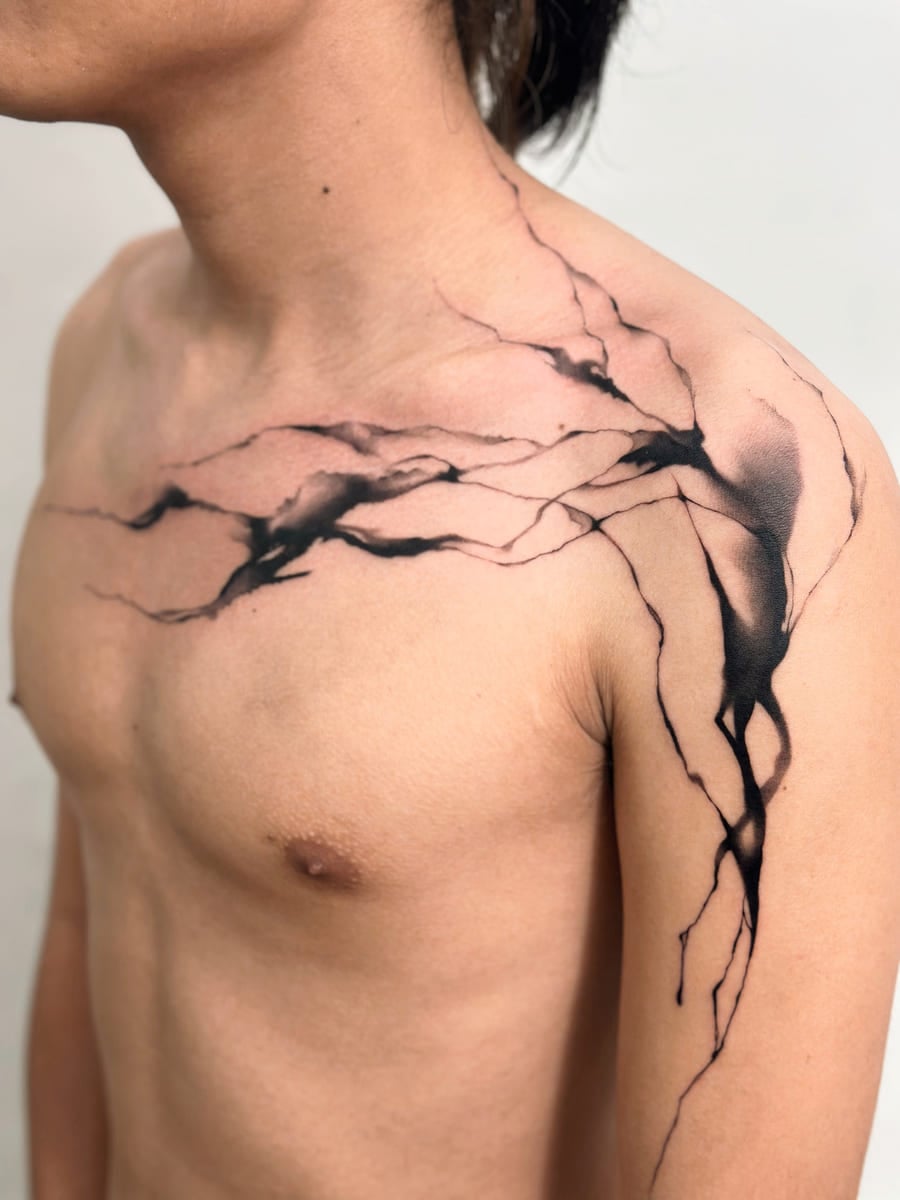
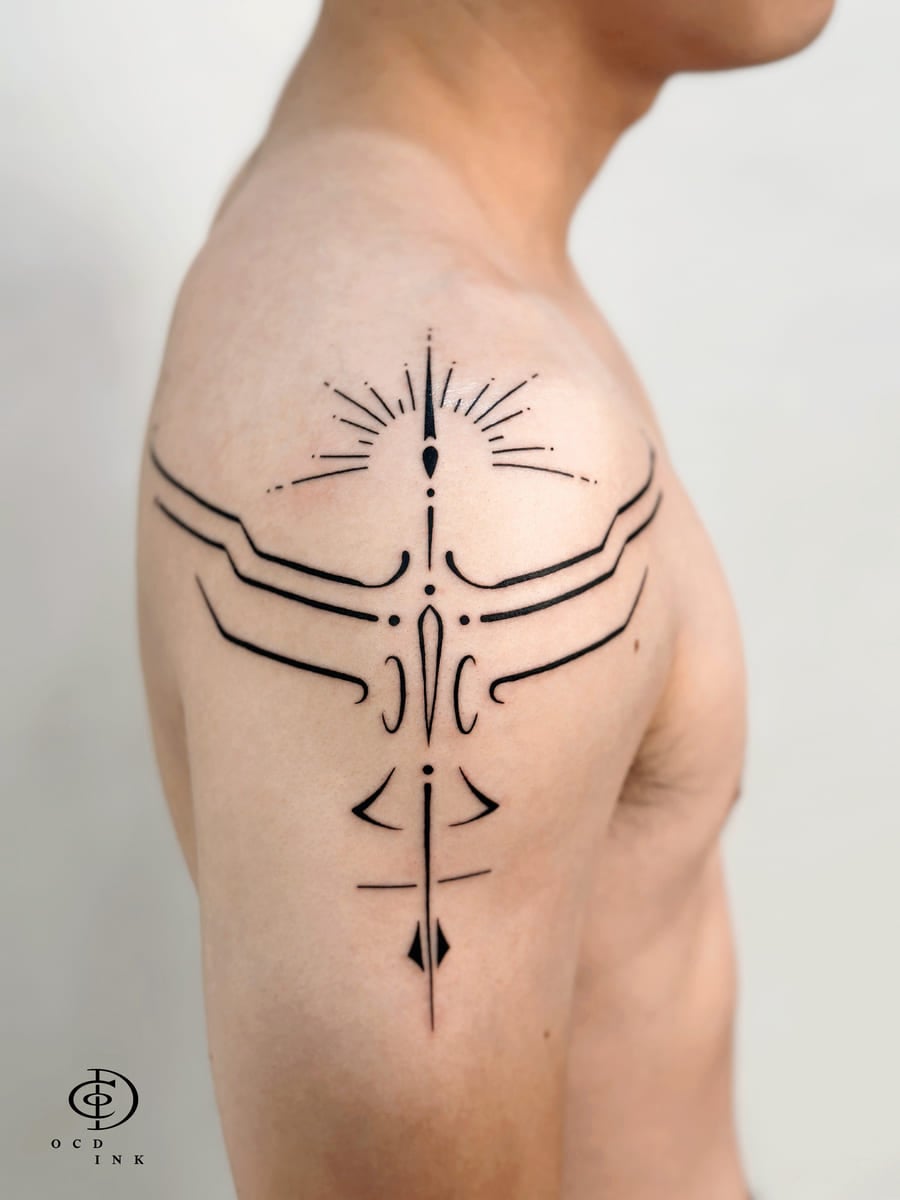
A design that caps the shoulder and sweeps onto the chest is one of the strongest tribal layouts, because it follows the deltoid and pectoral as one continuous shape. It is usually asymmetrical, covering one side.
Back
The largest canvas. Back layouts often mirror across the spine or flow from one shoulder blade down to the opposite hip. They need several sessions.
Legs and calves
Vertical designs that follow the calf muscle or wrap the thigh. If you are drawn to leg coverage because of Samoan tatau, read the section above first: the pe’a and malu are rites of passage, not layouts.
Design Directions
Geometric and abstract
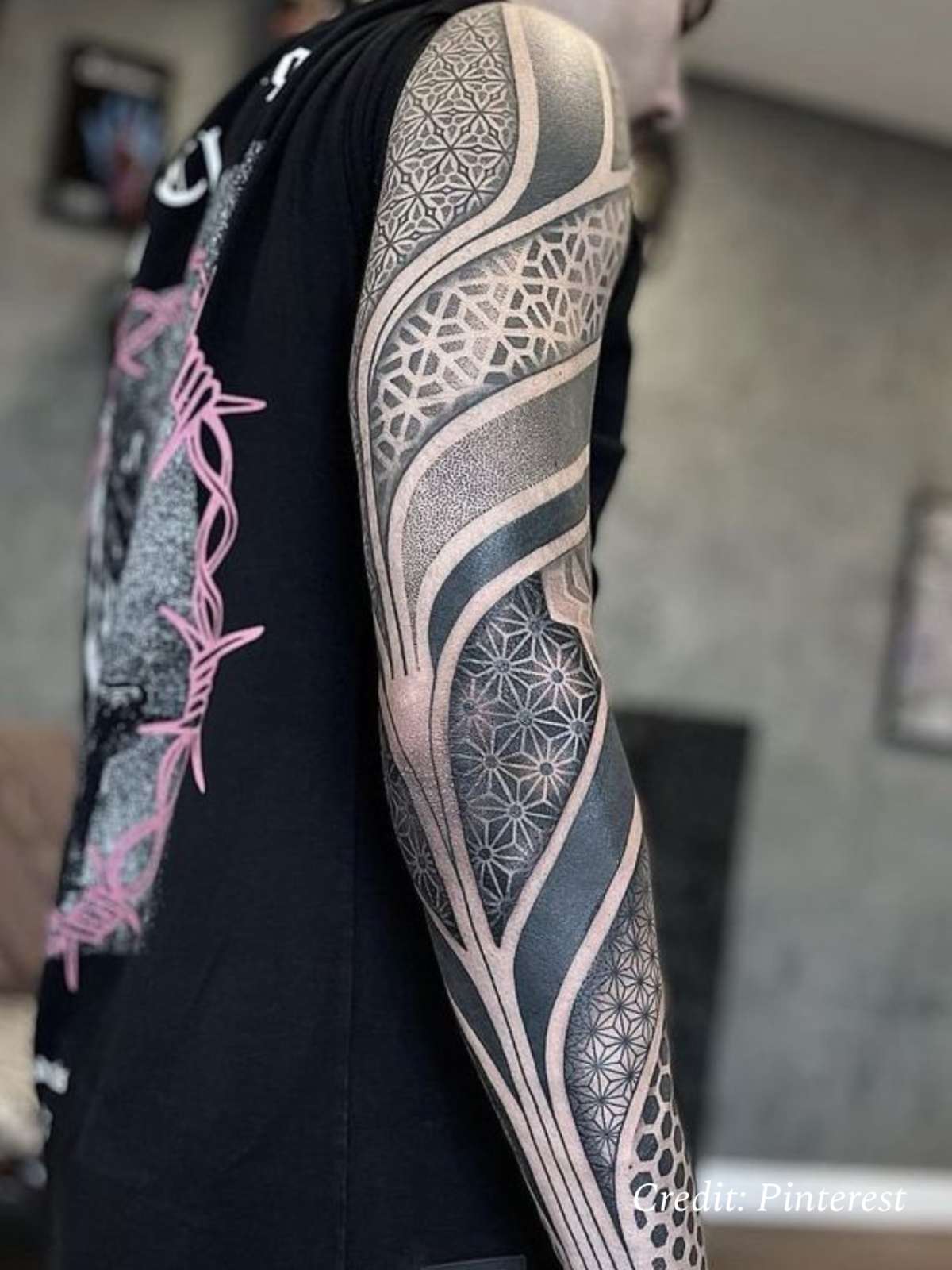
Triangles, chevrons and spirals arranged in bands or blocks. Clean and modern, and the clearest route to a tribal look that is personal rather than borrowed. See graphic work.
Animal forms
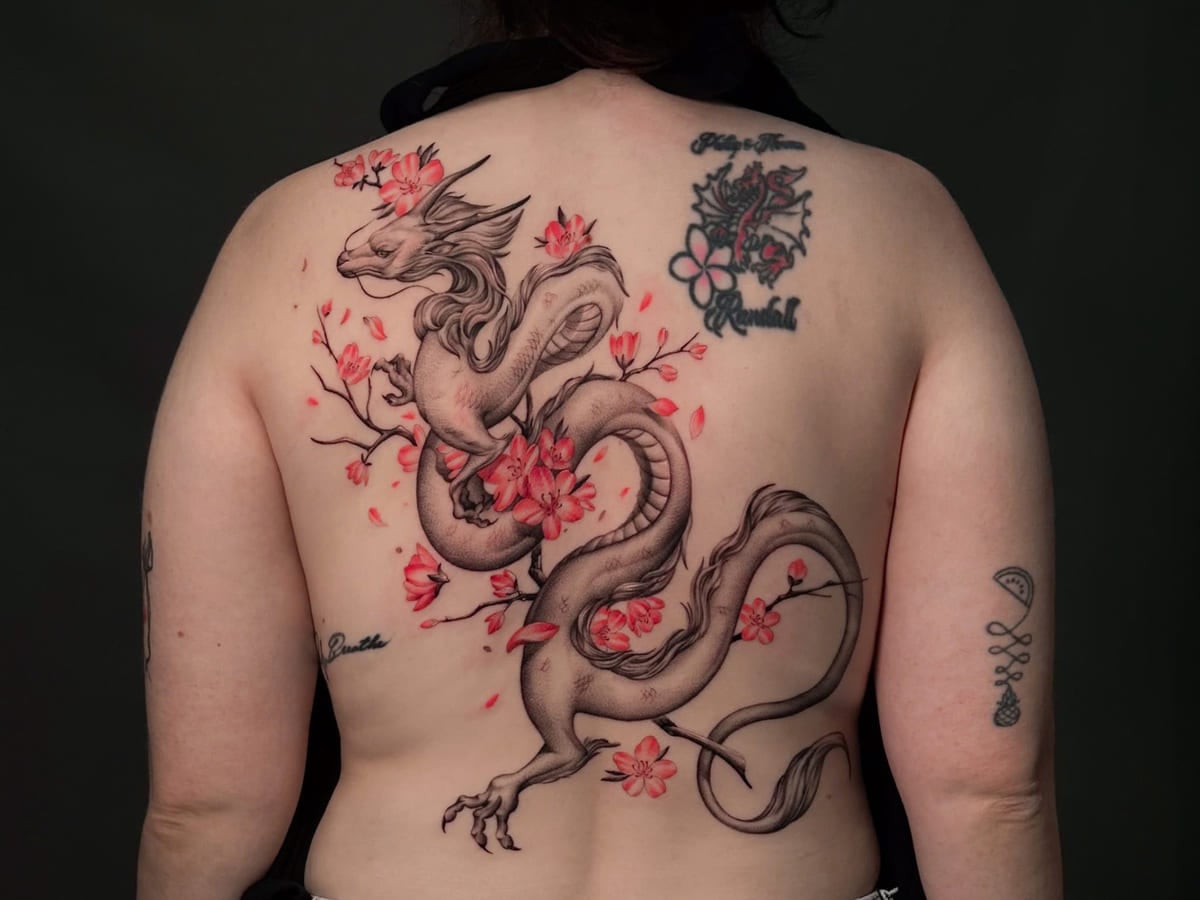
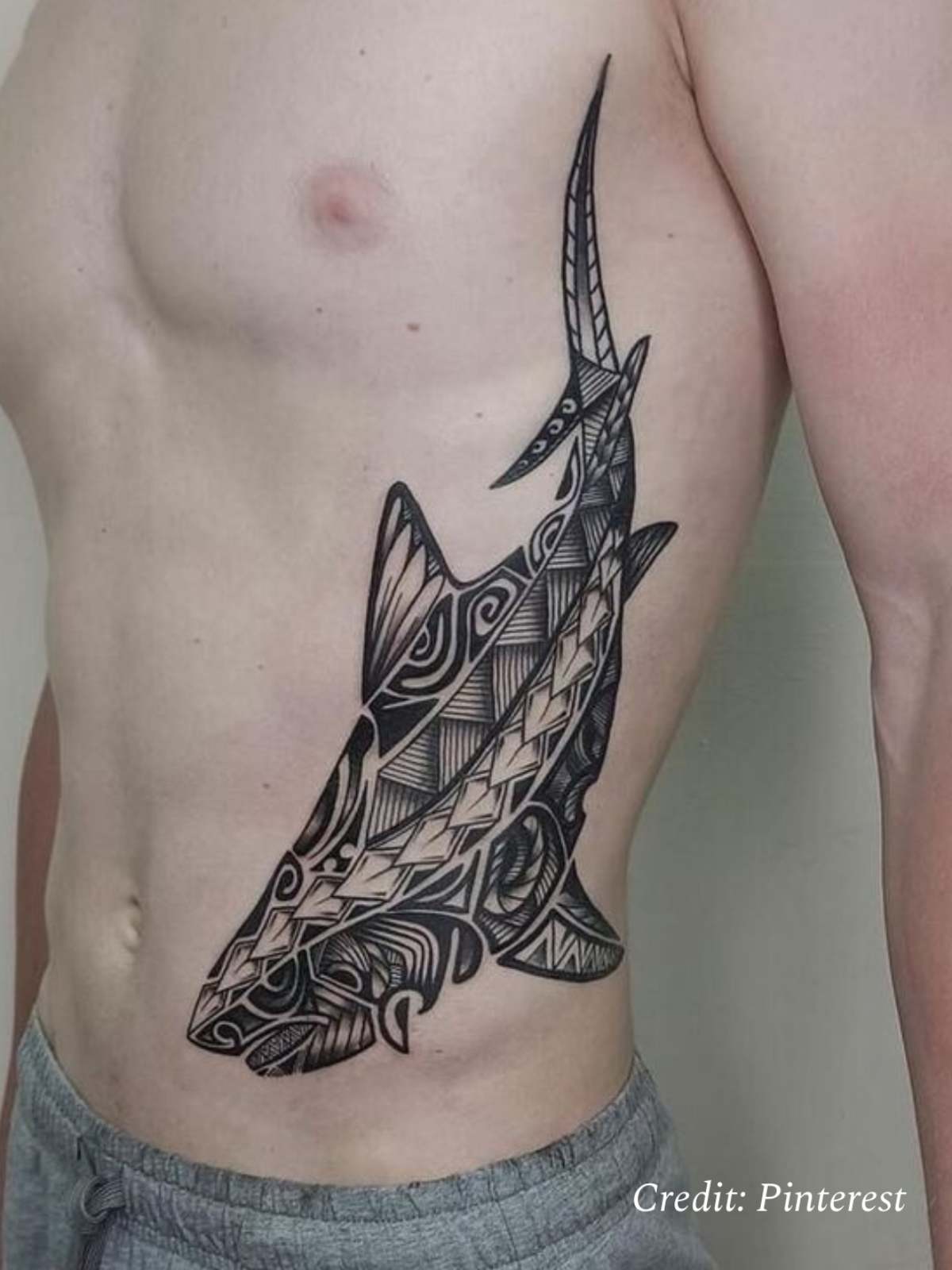
Animals rendered in bold black shapes: wolves, birds of prey, koi, dragons. Animal meanings differ widely between cultures, so choose the animal for what it means to you rather than for a meaning attributed to “tribal” culture in general.
Modern combinations
Tribal-inspired shapes combined with dotwork shading, fine line or ornamental detail. This is where most contemporary tribal work sits. See dotwork and ornamental tattoos.
A Blackwork Specialist
Tribal-inspired work is blackwork at heart: saturated black, clean edges and confident negative space. The reel below introduces Dasun, our blackwork and dotwork artist, whose high-contrast style is the foundation this kind of layout is built on.
How Tribal Ages, and What It Takes to Sit Through
- It ages exceptionally well. Solid black is the most durable pigment, and bold shapes have plenty of margin as ink settles over the years.
- Solid black takes time. Packing large areas evenly is slow, and patchy black is very visible. Expect larger pieces to need more than one session.
- It is often used for cover-ups. Dense black can cover older work, though it limits future changes to that area.
Tribal-Inspired Blackwork at OCD Ink Studio
OCD Ink Studio designs tribal-inspired work around the client’s muscles and will tell you honestly if a requested motif belongs to a specific cultural tradition. More black work is in our blackwork gallery. Four specifics:
- Blackwork specialists. Dasun works in blackwork and dotwork; Lin in fine line and blackwork; graphic work goes to Dino, who won Best of Day in the Black & Grey category at the Vietnam Tattoo Convention 2020.
- Healed results published openly in our healed gallery, where you can judge how evenly black is packed.
- A two-year touch-up warranty, which covers any patchy areas after healing.
- Two studios on the travel route, in Hanoi and Hoi An, with English-speaking consultation and a complimentary protective film for the first 72 hours.
Send your references with the area you want covered, or book in Hanoi or book in Hoi An. Large pieces are quoted per session; see our price guide.
FAQs
Is it disrespectful to get a tribal tattoo?
Tribal-inspired blackwork is widely worn and generally not seen that way. Copying specific cultural designs that carry lineage or ceremonial meaning, such as Samoan pe’a or Māori moko, is a different matter.
Where do tribal tattoos look good?
Where they can follow muscle: the shoulder and chest, upper arm, calf and back.
What is kirituhi?
A Māori term for Māori-inspired designs made for people outside the culture, as distinct from moko, which carries genealogy and identity.
Do tribal tattoos fade?
Very little compared with colour work. Solid black is the most durable pigment and bold shapes hold their form.
Can a tribal tattoo be extended later?
Yes, and it is common. Plan the first section with room to connect, for example from shoulder to chest or arm to back.
How long does a tribal tattoo take?
A shoulder cap takes 2 to 4 hours. A half sleeve or chest piece often needs two sessions, because solid black is slow to pack evenly. See how long tattoos take.