
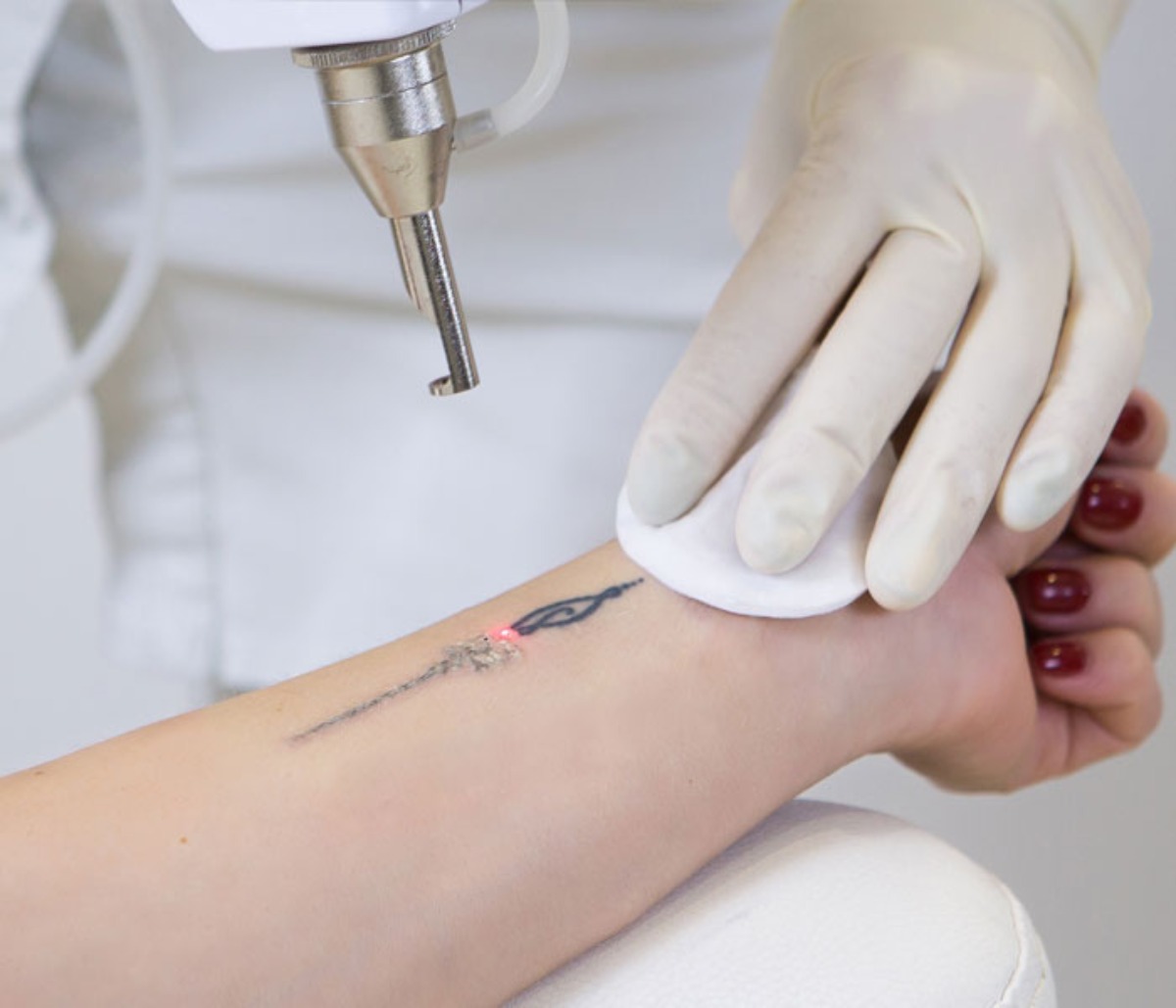
Laser tattoo removal hurts, but briefly. Most people describe it as a hot elastic band snapping against the skin, sharper than being tattooed but over in minutes rather than hours. A palm-sized tattoo takes roughly 5 to 15 minutes per session.
The pain is not the hard part. The hard part is that removal takes 6 to 12 sessions spread across a year or more, costs several times what the original tattoo did, and does not always clear completely. This guide covers what it actually feels like, what it realistically costs in time and money, and the alternatives worth considering first.
What It Feels Like
Laser removal works in pulses, not continuous passes. Each pulse fires for a fraction of a second, so the sensation comes in bursts and stops the moment the session ends.
The three descriptions people give most often:
- An elastic band snapped hard against the skin, repeatedly and quickly
- Hot fat spitting from a pan, a brief sharp heat rather than a dull ache
- A deep prickling that fades within seconds of the laser lifting
Compared with being tattooed: more intense per second, far shorter overall. A three-hour tattoo session involves three hours of continuous discomfort. A removal session on the same piece might involve ten minutes.
Afterwards
- Redness and swelling like a moderate sunburn, for 24 to 48 hours
- Frosting, a temporary white film over the treated area, appearing within seconds and fading in 20 to 30 minutes. This is expected, not a burn.
- Tenderness for a day or two, then itching as the skin repairs
- Occasional blistering, which is normal and should not be popped
What Changes the Pain Level
| Factor | Easier | Harder |
| Placement | Thigh, calf, outer arm, buttock | Ribs, spine, ankle, wrist, neck, fingers |
| Ink colour | Black and dark blue absorb laser energy efficiently | Green, turquoise and yellow need more passes |
| Ink density | Fine line and light shading | Solid colour packing and heavy blackwork |
| Laser type | Picosecond lasers, shorter pulses and less heat | Older Q-switched or non-specialist equipment |
| Your state | Rested, hydrated, calm, fed | Tired, anxious, dehydrated |
The Part That Matters More Than Pain
Most guides stop at “it stings but it is manageable”. The realities people wish they had known:
- 6 to 12 sessions is typical, and complex or colourful pieces can need more.
- 6 to 8 weeks between sessions. The body clears the fragmented pigment through the lymphatic system, and that cannot be rushed. Twelve sessions at eight-week intervals is close to two years.
- Cost compounds. Each session is priced individually, so a full course typically runs to several times the price of the original tattoo, and often more than a cover-up would have cost.
- Complete clearance is not guaranteed. Green, turquoise, yellow and white pigments resist laser treatment. Many removals end at “faded enough to cover” rather than “gone”.
- Scarring is possible, particularly from aggressive settings or if blisters are picked.
- Skin tone matters. Darker skin needs more conservative settings to avoid pigment changes, which usually means more sessions.
Cheaper Alternatives Worth Considering First
Laser removal is the most expensive and slowest option available. Before committing to it, three questions are worth answering honestly.
Do you dislike the design, or the execution?
If the design is right but the linework has faded or gone patchy, you do not need removal. A touch-up costs a fraction of the price and takes under an hour.
Would something else in that space work?
A cover-up replaces the old tattoo with a new design. It has to be larger and generally darker, so it constrains what you can have there, but it costs roughly what a new tattoo costs and is finished in one or two sessions rather than two years. For most people who no longer want a tattoo, this is the better answer.
Do you need it gone, or gone enough?
Partial removal is the underused middle path. Three or four sessions to lighten a tattoo, then a cover-up over the faded remains, is far quicker and cheaper than removing it completely, and gives an artist much more freedom in the new design than covering a solid original would. If your goal is a different tattoo rather than clear skin, ask about this specifically.
Reducing the Discomfort
- Topical numbing cream applied 30 to 60 minutes before, particularly for ribs, ankles and wrists
- Cryo cooling, cold air directed at the skin during treatment, which most established clinics use
- Split large tattoos across sessions rather than treating everything at once
- Book for the morning when you are rested; fatigue measurably increases perceived pain
- Eat beforehand and stay hydrated. Well-hydrated skin also responds better between sessions
- Protect it from sun afterwards. Tanned or sunburnt skin cannot be treated safely, which delays your next session
Choosing a Removal Clinic
Laser removal is a medical procedure, not a tattoo service. Tattoo studios, including ours, do not perform it. Look for a licensed clinic or dermatology practice and check:
- The laser type, and whether they have wavelengths suited to your ink colours
- A patch test before committing to a full course
- A written estimate of session count and total cost, not just a per-session price
- Before and after photographs of tattoos similar to yours in colour and density
- Honesty about what will not clear. A clinic promising complete removal of a green and yellow piece in four sessions is overselling
The Cheapest Removal Is the One You Never Need
Almost every tattoo that ends up under a laser was avoidable, and the pattern is consistent: a rushed decision, a flash design chosen on the day, or an artist selected on price rather than portfolio.
Three habits prevent nearly all of it:
- Judge artists on healed work. Every tattoo looks sharp on the day it is done. Six weeks later you can see whether the lines held. Our healed results gallery exists for this reason.
- Sit with the design. A custom piece involves a sketch, revisions and a night to think. That process is what separates a tattoo you keep from one you pay to remove.
- Match the artist to the style. A specialist in fine line and one in colour realism are not interchangeable. See our artists by specialisation.
If you are planning a first tattoo and want to get it right, our guide to getting a tattoo in Vietnam covers how to vet a studio, and the price guide explains why the cheapest quote is usually the most expensive decision.
Cover-Up Work at OCD Ink Studio

We do not offer laser removal, but our artists at the Hanoi and Hoi An studios regularly design cover-ups over tattoos people no longer want, including work that has been partially lasered. Send us a photograph of what you have and we will tell you honestly whether it can be covered, whether it needs lightening first, or whether removal is genuinely the only route.
FAQs
Does tattoo removal hurt more than getting the tattoo?
More intense per second, much shorter overall. Most people find a ten-minute removal session easier to sit through than a three-hour tattoo session.
How many sessions does removal take?
Typically 6 to 12, spaced 6 to 8 weeks apart, so one to two years for a full course. Older, faded, black-only tattoos clear fastest.
How much does tattoo removal cost?
Pricing is per session and varies by clinic and tattoo size. Across a full course it usually exceeds the cost of the original tattoo several times over, and often exceeds a cover-up.
Will my tattoo disappear completely?
Not always. Black and dark blue respond well. Green, turquoise, yellow and white are difficult, and many treatments end at significant fading rather than complete clearance.
Can I get a new tattoo over a removed one?
Yes, once the skin has fully healed, usually several months after the final session. Partial removal followed by a cover-up is a common and often better path.
Does OCD Ink Studio do tattoo removal?
No. Removal is a medical laser procedure and needs a licensed clinic. We do design and tattoo cover-ups, including over partially lasered work.
Is numbing cream worth it?
For sensitive placements such as ribs, ankles, wrists and the neck, yes. Apply 30 to 60 minutes before and check with the clinic first, since some prefer their own product.