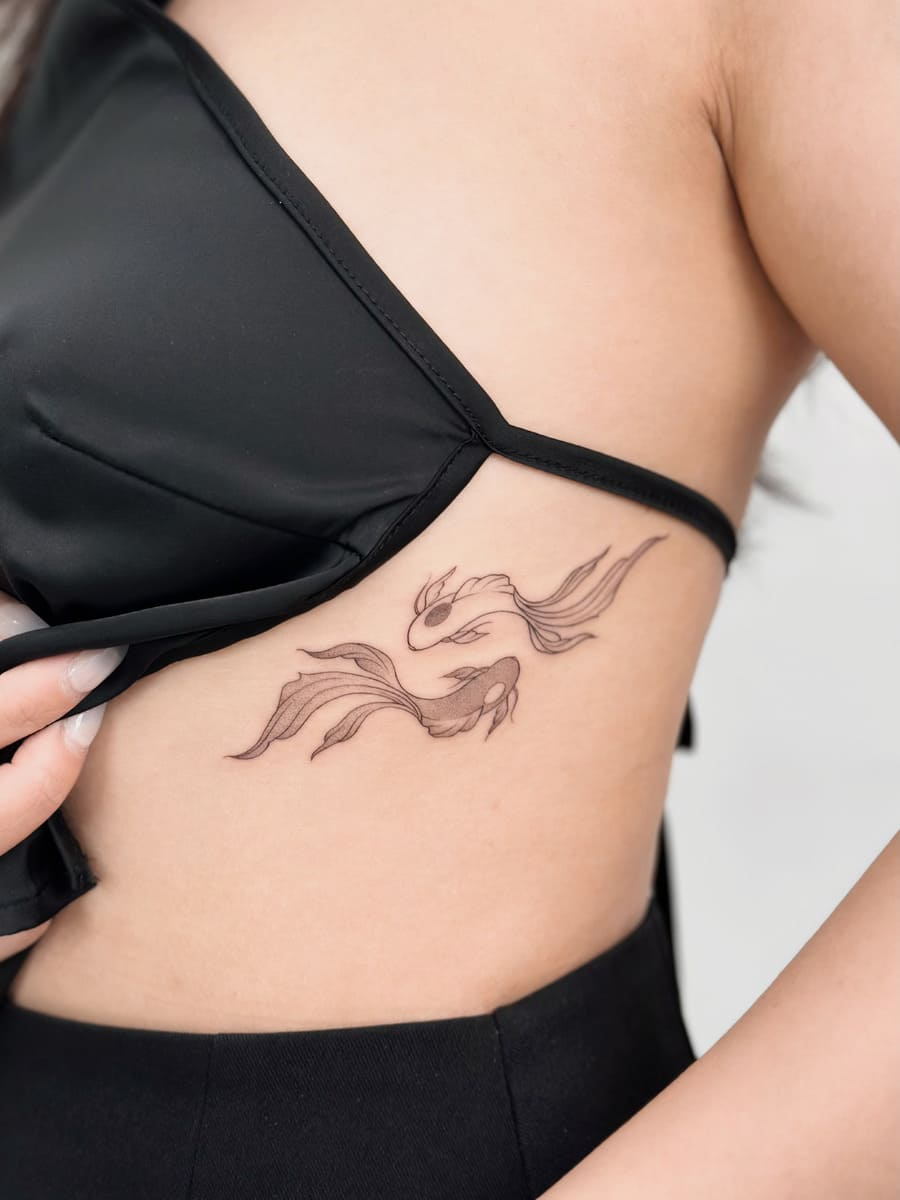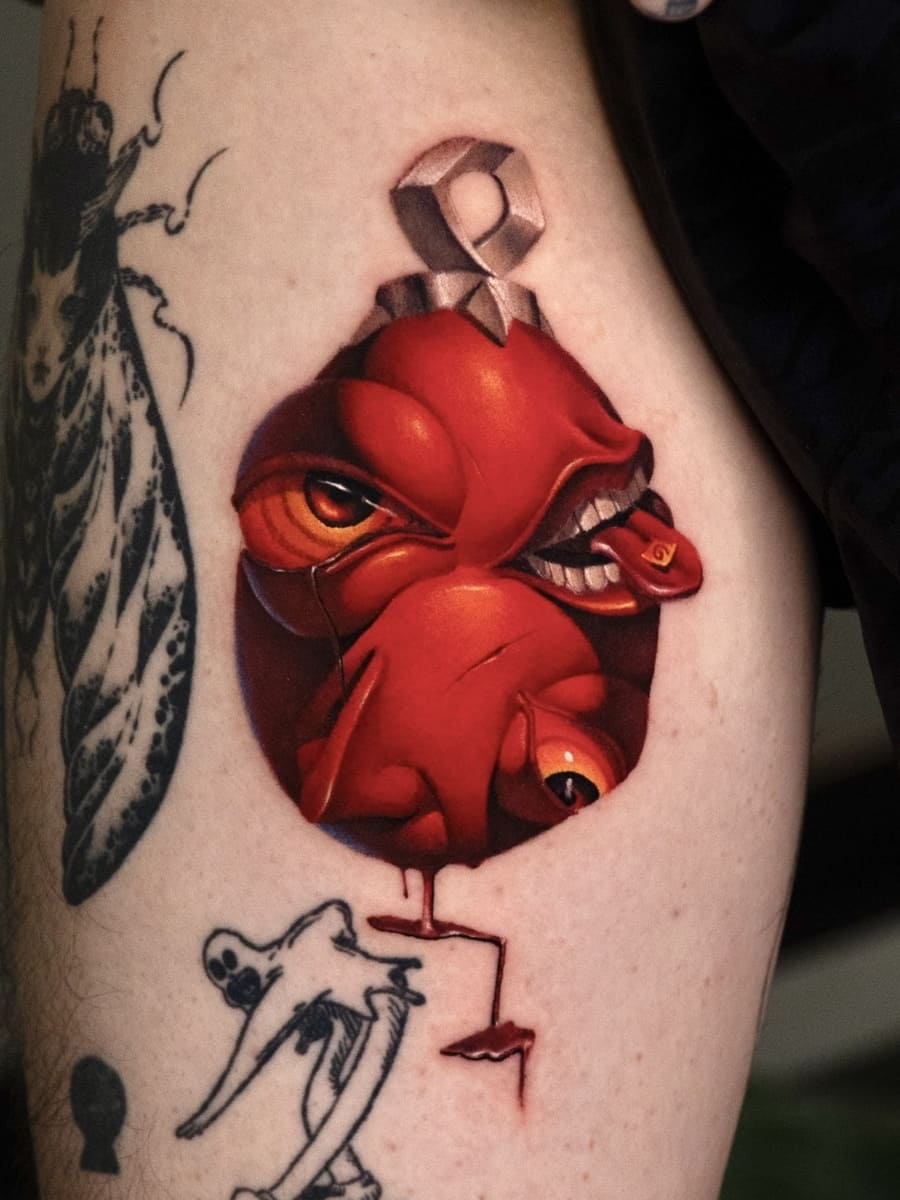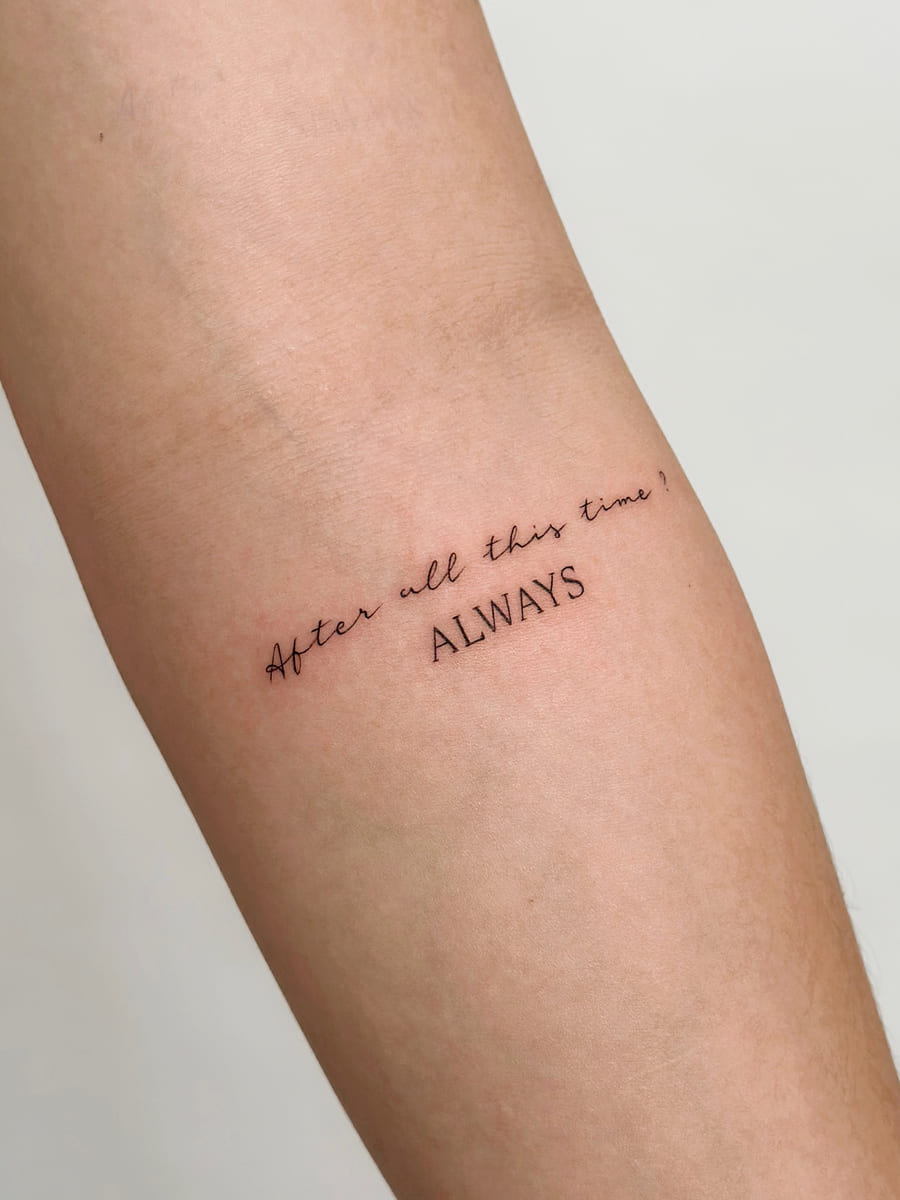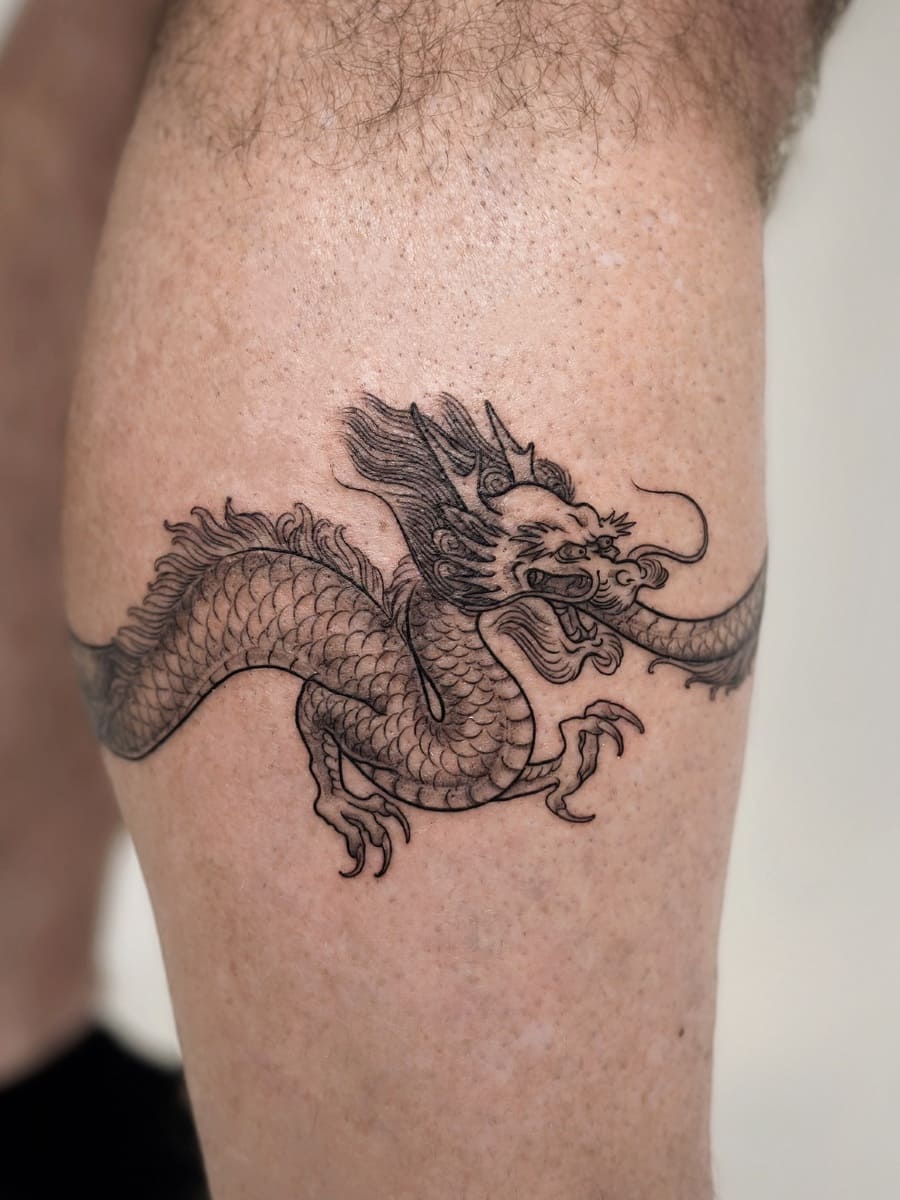

A couple tattoo works best when each half still reads as a complete design on its own. That single rule separates the pieces people keep from the ones they end up covering. Matching, mirrored and complementary are the three structures worth understanding, and they behave very differently over time.
This guide covers the four design structures, the placement decisions that make a pair look intentional rather than coincidental, the size thresholds small couple tattoos need to survive, and how to plan two tattoos in one session if you are travelling.
The Four Structures of a Couple Tattoo
Almost every couple tattoo falls into one of four structures. Choosing deliberately between them is the most useful decision you will make, because each carries a different risk if circumstances change.
| Structure | What it is | Works alone? | Best for |
| Identical | The same design on both people | Yes | Shared symbols, dates, coordinates |
| Mirrored | The same design reversed, so the pair faces inward when side by side | Yes | Wrists, forearms, ankles |
| Complementary | Two related but different designs: sun and moon, lock and key | Yes | Couples who want individuality inside the pair |
| Interlocking | Two halves that only make sense together, like puzzle pieces | No | The highest-commitment option |
Interlocking designs are the ones to think hardest about. A half-puzzle-piece on your forearm reads as an incomplete shape without the other half present, which is a permanent dependency on another person being in the room. Most experienced artists will raise this with you. Complementary designs give you the same connection with none of the exposure: a sun still looks like a sun on its own.
Identical and matching
The simplest and most common approach. Shared initials, a meaningful date in Roman numerals, coordinates of a place that matters, or a small line-art symbol both of you connect with. Timeless and low-risk.

One practical detail that catches people out: identical tattoos on two different bodies will not look identical. Skin texture, body hair, limb curvature and how each person heals all affect the finished result. This is normal and it is why the stencil is placed and checked on each person individually rather than copied by measurement.
Mirrored
The same design, reversed, placed so the pair faces inward when you stand or hold hands. One partner takes the left wrist, the other the right. It is a small decision that makes a photograph of the two tattoos together look composed rather than accidental.
Complementary
Two designs in conversation: sun and moon, mountain and wave, lock and key, or two halves of a shared landscape. This is the structure with the best balance of meaning and independence, and it gives an artist the most room to design something specific to you rather than a stock pairing.

Playful and illustrative
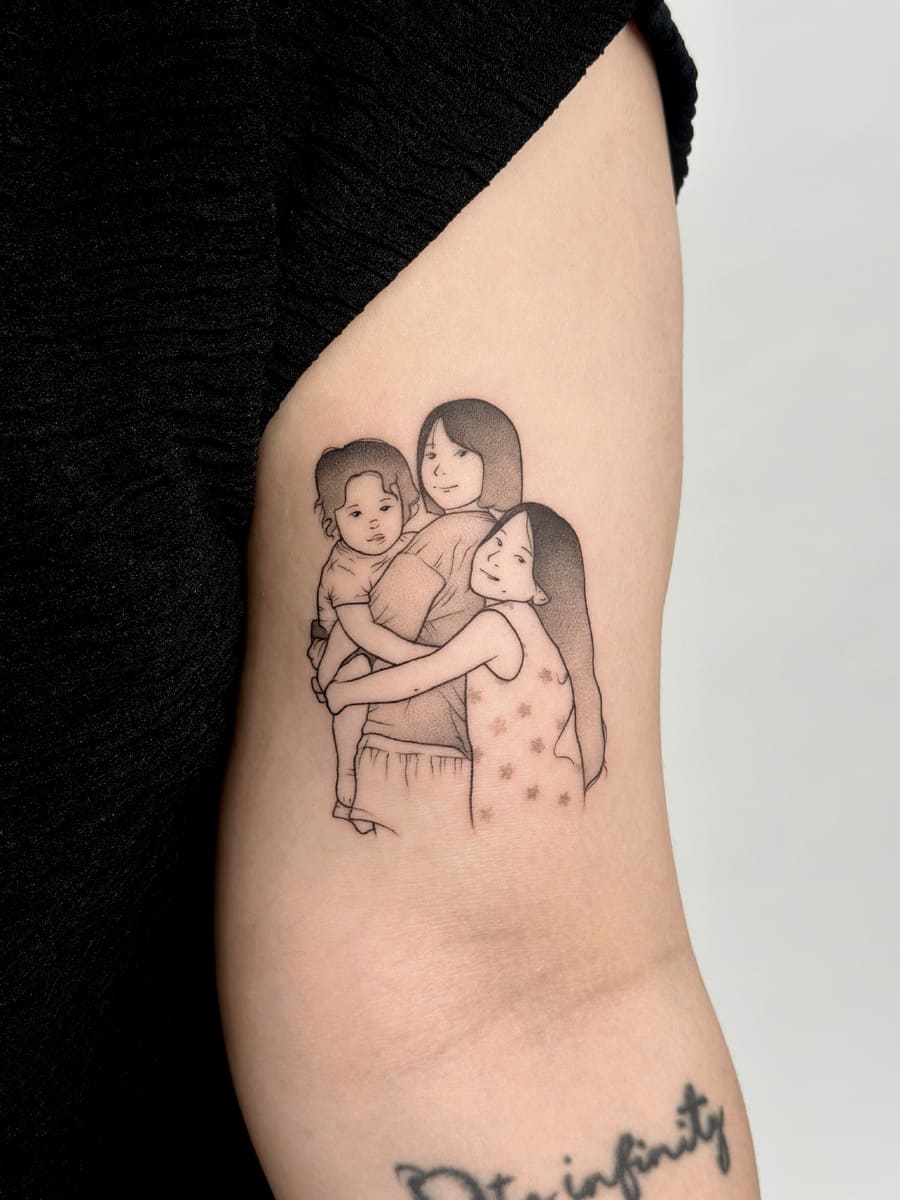
Stick figures, small characters, an inside joke rendered in line art. These age better than people expect, provided they come from something genuinely yours rather than a trend. A reference to a film you both love in 2019 may not carry the same weight in 2039; a drawing one of you made does.
The Size Threshold for Small Couple Tattoos
Most couple tattoos are small, and small fine line work has a floor below which it stops holding. Ink spreads very slightly in the skin over the years, so tight detail gradually closes up.
| Design | Practical minimum | Why |
| Simple symbol or silhouette | 2 to 3 cm | Few junctions, so little to close up |
| Initials or short lettering | 3 cm | Letter counters fill in below this |
| Roman numeral dates | 3 to 4 cm | Serifs and narrow gaps merge |
| Line-art figures or objects | 4 to 5 cm | Internal detail needs breathing room |
| Fingers, any design | Not recommended | Highest-friction area on the body; fades fastest |
Because most studios apply a minimum charge covering sterile setup and a fresh needle cartridge, a 2 cm design and a 4 cm design often cost the same. Given that, going slightly larger usually costs nothing and holds up considerably better. Ranges are in our Vietnam tattoo price guide.
Placement for a Pair
Placement decides whether two tattoos read as a pair or as two separate tattoos that happen to exist.
| Placement | Suits | Notes |
| Inner forearm | All four structures | Flat, heals easily, easy to photograph together. The safest choice. |
| Wrist | Small symbols, mirrored pairs | Highly visible. Use generous line weight, as the area moves constantly. |
| Ankle | Small mirrored designs | Discreet. Shoe friction slows healing. |
| Ribs or chest | Private symbolic pieces | Intimate placement. More painful, longer to sit. |
| Upper arm or thigh | Larger illustrative pairs | Room for detail, comfortable, easy to cover |
| Behind the ear | Very small symbols | Subtle, but thin skin makes it sharper than it looks |
Two things worth agreeing before the appointment. First, decide left or right together, because mirrored placement only works if you plan it. Second, match the scale, not just the design: the same tattoo at 4 cm on a slim wrist and 4 cm on a broad forearm will read as two different sizes.
Getting Couple Tattoos Together in One Session
Two small tattoos in a single appointment is normal and usually the better way to do it: you share the experience, and the studio only sets up once. A few practical points if you are planning it around a trip.
- Send both designs ahead. Custom work needs sketching and revision time. Sending references, sizes in centimetres and placements before you arrive turns a multi-day process into one appointment.
- Expect roughly an hour per person for a small piece, including stencil placement and setup. Two small tattoos is a half-day, not fifteen minutes. See how long tattoos take.
- Decide who goes first. Watching your partner go first is reassuring for a nervous first-timer.
- Book early in your trip. Sea, pools and strong sun are out for about two weeks, so schedule beach days before the tattoo, not after.
- Both of you skip alcohol for 24 hours beforehand. It thins the blood, which means more bleeding and slightly poorer ink retention.
What a Couple Session Actually Looks Like
If you have not done this before, it helps to see the pace of a real couple appointment: the consultation, the stencil check on each person, and two small pieces completed in the same visit. The short film below follows Amber and Skip through a couple session at our Hanoi studio, and gives a realistic sense of how long each stage takes and how the two designs are scaled to each person rather than copied by measurement.
Choosing an Artist for a Pair
Couple tattoos put a specific demand on an artist that a single piece does not: consistency across two bodies. Two designs that are meant to match have to match after healing, on two different skin types, worked in the same session.
- Ask to see healed work, not fresh photos. Every tattoo looks sharp ten minutes after the session. At six weeks you can see whether the lines held evenly. This matters doubly for a pair, because inconsistency between two pieces is far more visible than in a single tattoo.
- Check depth in the specific style. Most couple tattoos are fine line or small graphic work, which is unforgiving of technique gaps that heavier styles can hide. A portfolio with twenty strong fine line pieces tells you more than one with range across many styles.
- Confirm the same artist does both. Two artists working in parallel is faster, but line weight and shading habits differ between people, and that difference shows.
Couple Tattoos at OCD Ink Studio
OCD Ink Studio works almost entirely on custom commissions, and couple and matching pieces are among the most frequent requests at both studios. Four things that are specific rather than general:
- Artists assigned by specialisation, not availability. Fine line and graphic pieces go to a fine line specialist; colour and realism work goes to Mike, a colour and realism artist. Founder Dino won Best of Day in the Black & Grey category at the Vietnam Tattoo Convention 2020. You can see the full team on our artist page.
- A two-year touch-up warranty. Settling work after healing is covered rather than charged, which matters for a pair where one half may settle differently from the other.
- Healed results published openly. Our healed gallery shows the work at six weeks and beyond, which is the stage that actually tells you whether fine line work holds.
- Two studios on the main travel route. One in Hanoi’s Old Quarter and one near Hoi An Ancient Town, with English-speaking consultation at both and a complimentary protective second skin film for the first 72 hours.
If your designs are settled, book in Hanoi or book in Hoi An. If you are still deciding between structures, send us both ideas with sizes and placements and we will come back with a design direction, an artist match and a quote.
FAQs
What is the best type of couple tattoo?
Complementary designs, where each half works as a complete image on its own. They carry the same shared meaning as an interlocking pair without depending on the other half being present.
How small can a couple tattoo be?
Around 2 to 3 cm for a simple symbol, 3 cm for initials, and 4 to 5 cm for line-art figures with internal detail. Below those sizes, fine detail closes up as the tattoo ages.
Can we both get tattooed in the same appointment?
Yes, and it is the usual way couples do it. Allow roughly an hour per person for a small piece, including consultation and stencil placement.
Will our matching tattoos look exactly the same?
Very close, but not identical. Skin texture, limb curvature and individual healing all affect the result. A good artist scales and places the stencil for each person rather than copying by measurement.
How much do couple tattoos cost?
Small designs typically fall in the USD 30 to 60 band each at a professional studio, with most applying a minimum charge per person. Full ranges are in our price guide.
What if we break up?
This is the honest reason to avoid interlocking designs and names. A complementary or symbolic piece keeps its own meaning regardless. If a tattoo does need changing later, a reworking or cover-up is far cheaper and quicker than laser removal.