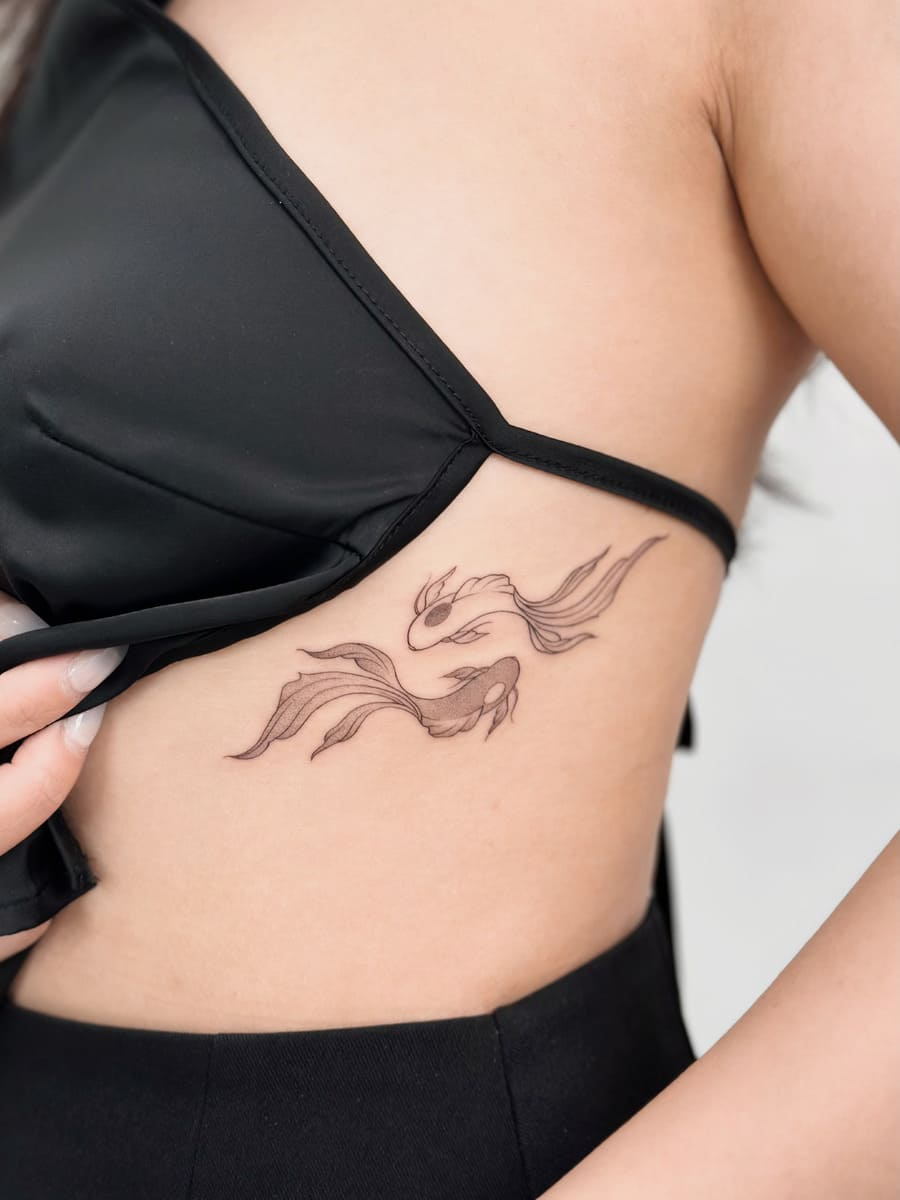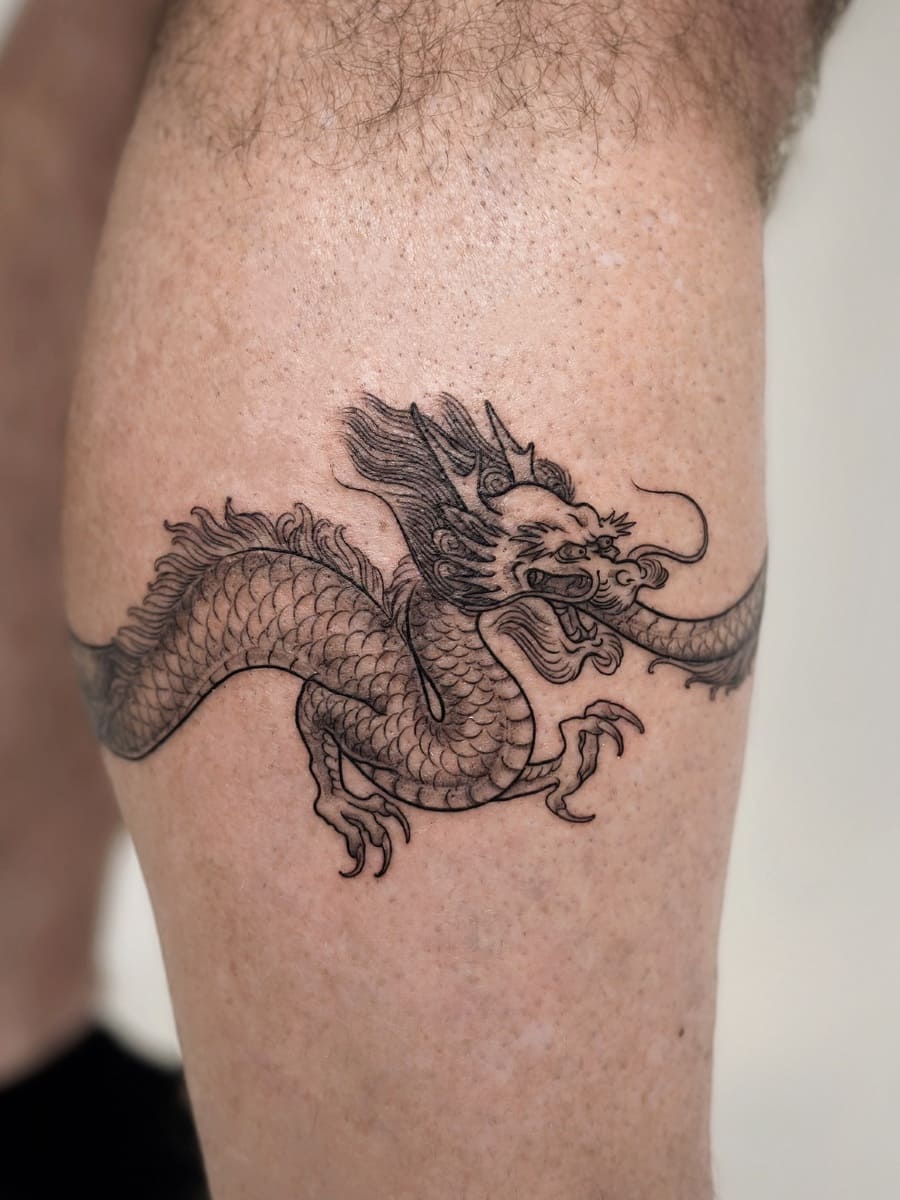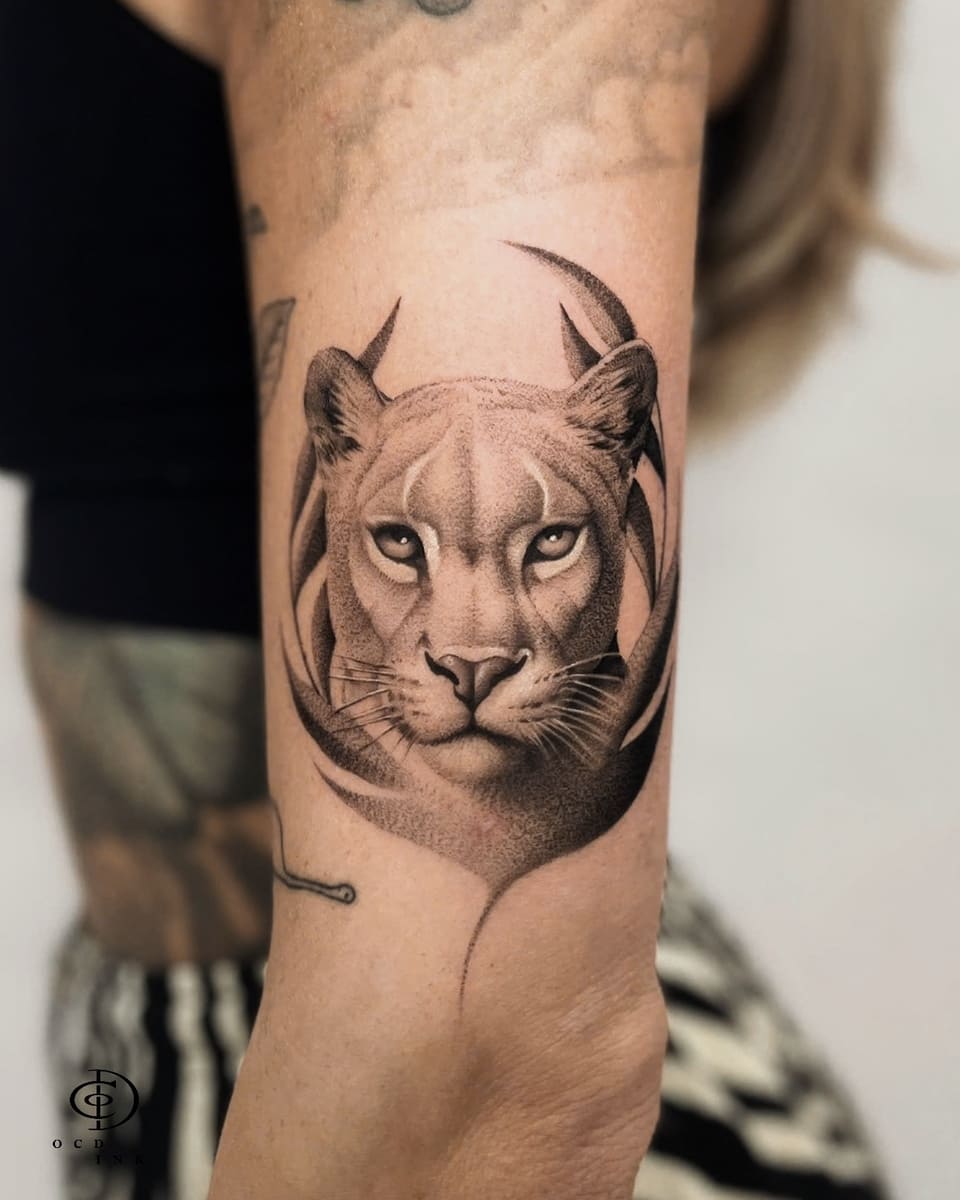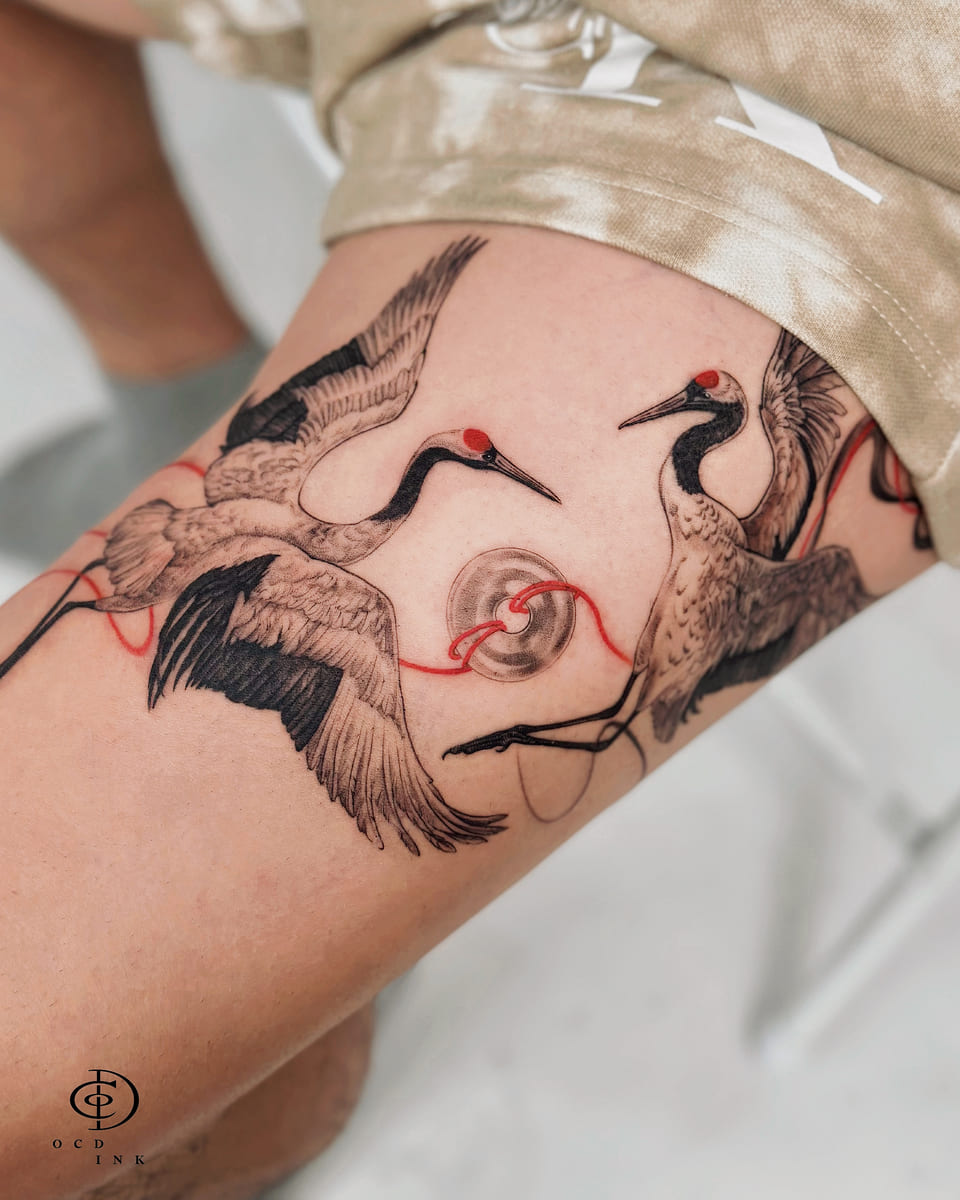

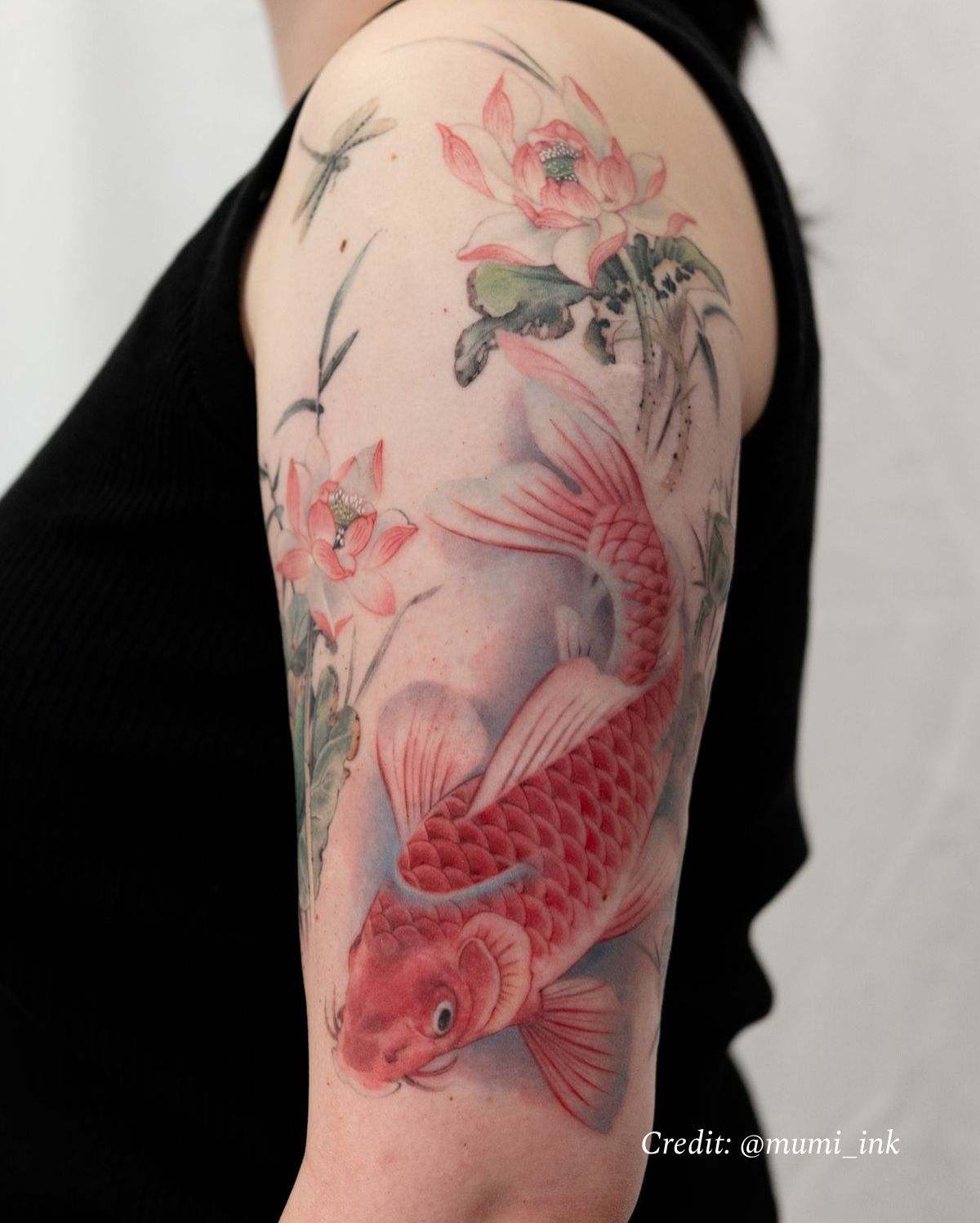
A lotus and koi fish tattoo combines two symbols that tell one story: struggle followed by transformation. The koi represents perseverance, from the Japanese legend of the fish that swims upstream and becomes a dragon. The lotus represents purity emerging from difficulty, rising clean out of muddy water.
Together they are one of the most requested combinations in Asian-inspired tattooing. This guide covers what each element means, the one detail that changes the meaning entirely (the direction the koi swims), the styles and sizes the design needs to work, and how to choose an artist for it.
What the Two Symbols Mean
| Element | Origin | Meaning |
| Koi fish | Japanese and Chinese legend, notably the Dragon Gate story | Perseverance, ambition, courage, transformation through hardship |
| Lotus flower | Buddhist and Hindu symbolism, also Vietnam’s national flower | Purity, rebirth, spiritual growth, beauty rising out of difficulty |
| Combined | , | A journey through hardship into clarity: effort plus outcome in one image |
The reason the pairing works so well visually, rather than only symbolically, is that the two shapes solve each other’s problems. The koi is a long, directional form that needs something to move through or towards. The lotus is a static, radial form that needs movement around it. Put together with water, they create a composition with a natural focal point and flow, which is why the design scales well from a forearm piece to a full back.
Koi colour changes the meaning
In traditional Japanese symbolism, koi colours carry distinct associations: black koi with overcoming adversity, red or orange with strength and family, gold with prosperity, and blue with calm and masculinity. This matters practically as well as symbolically, because it decides whether you are commissioning a colour piece or a black and grey one, and those are different technical jobs with different longevity.
The Detail Most People Miss: Which Way the Koi Swims
This is the single most important design decision in the piece, and it is usually decided by accident rather than intention.
- Koi swimming upward represents the struggle still in progress: ambition, a goal being pursued, adversity being faced now.
- Koi swimming downward represents the struggle completed: the obstacle overcome, the fish returning, a period of reflection and calm.
Because the direction is read relative to your body rather than the paper it was drawn on, this decision has to be made with the placement, not before it. A koi drawn swimming up the page becomes a koi swimming down if the stencil is placed pointing toward the wrist. Raise it at consultation, because it is one of the few tattoo details where the meaning genuinely inverts.
Styles and What Each One Demands
Colour
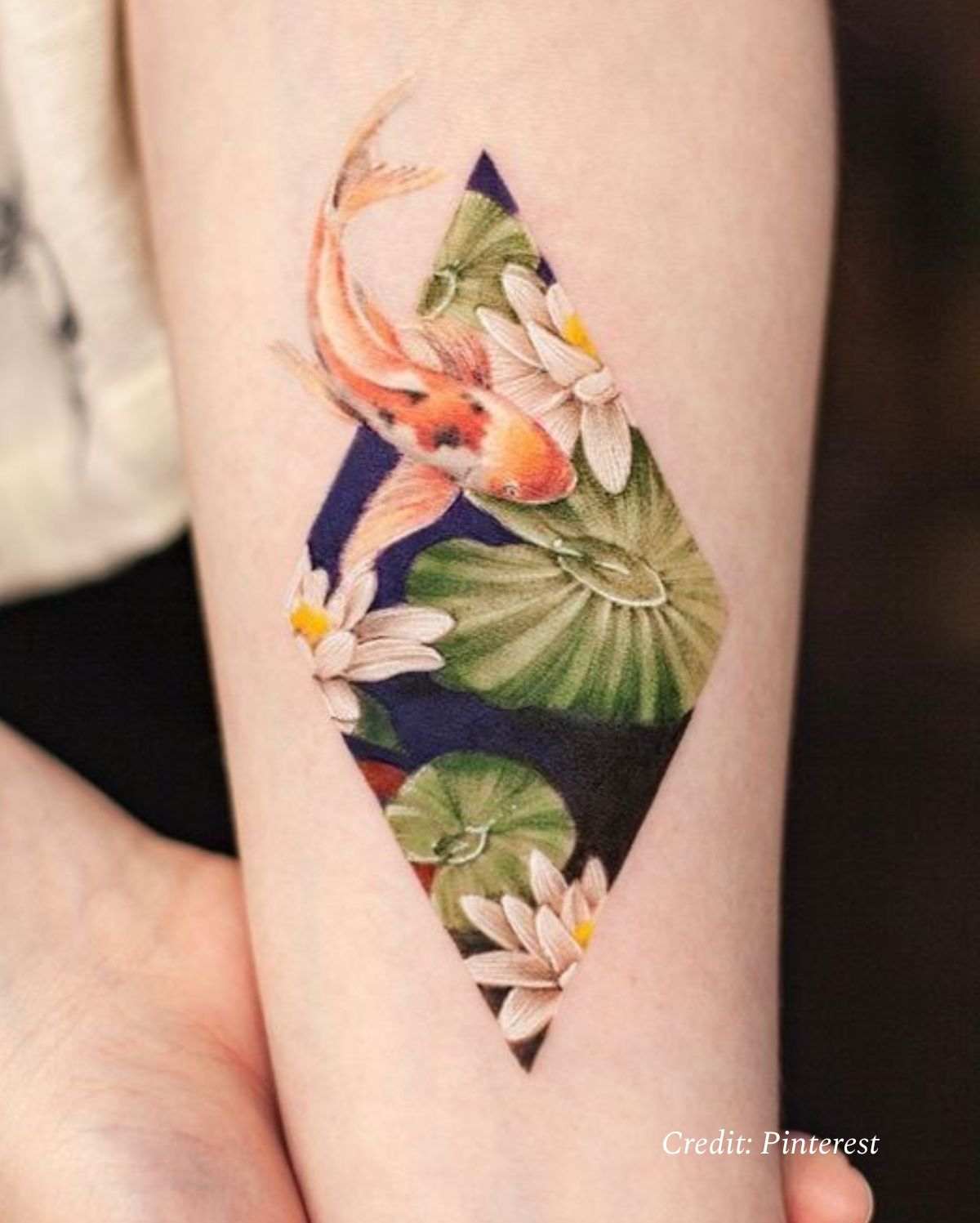
Reds, oranges and blues give the koi its energy and are the traditional treatment. The trade-off is maintenance: red and orange pigments break down faster under UV exposure than black does, so a colour koi needs disciplined sun protection and is more likely to want a refresh over the years. This is colour work and it belongs with an artist who specialises in it.
Black and grey
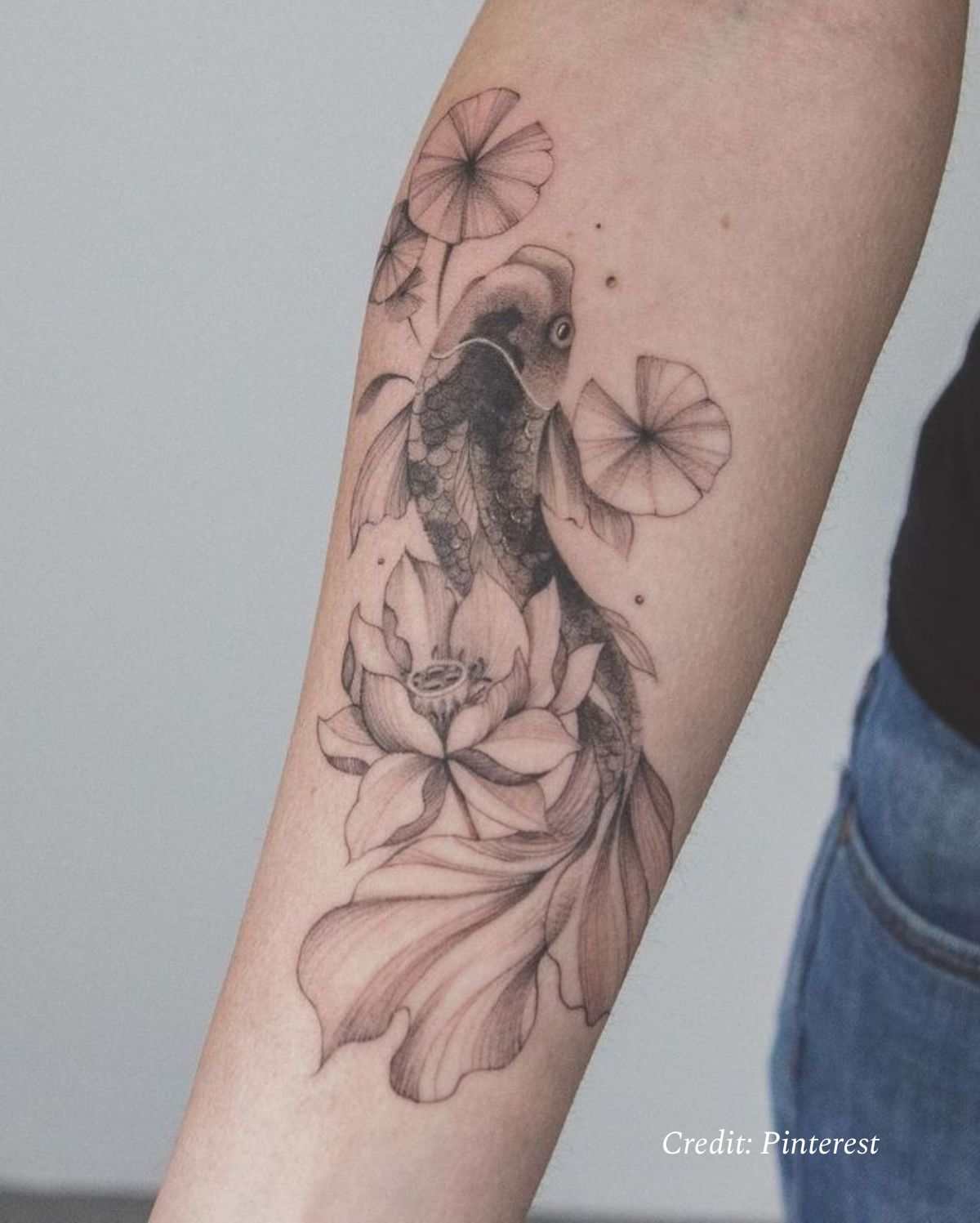
Built entirely from black ink diluted to varying greys. It relies on contrast rather than colour to separate the koi from the water and the lotus from the background, which makes it more technically demanding in shading but considerably more durable. If you want the piece to look essentially the same in twenty years, this is the version to choose.
Water and wave elements
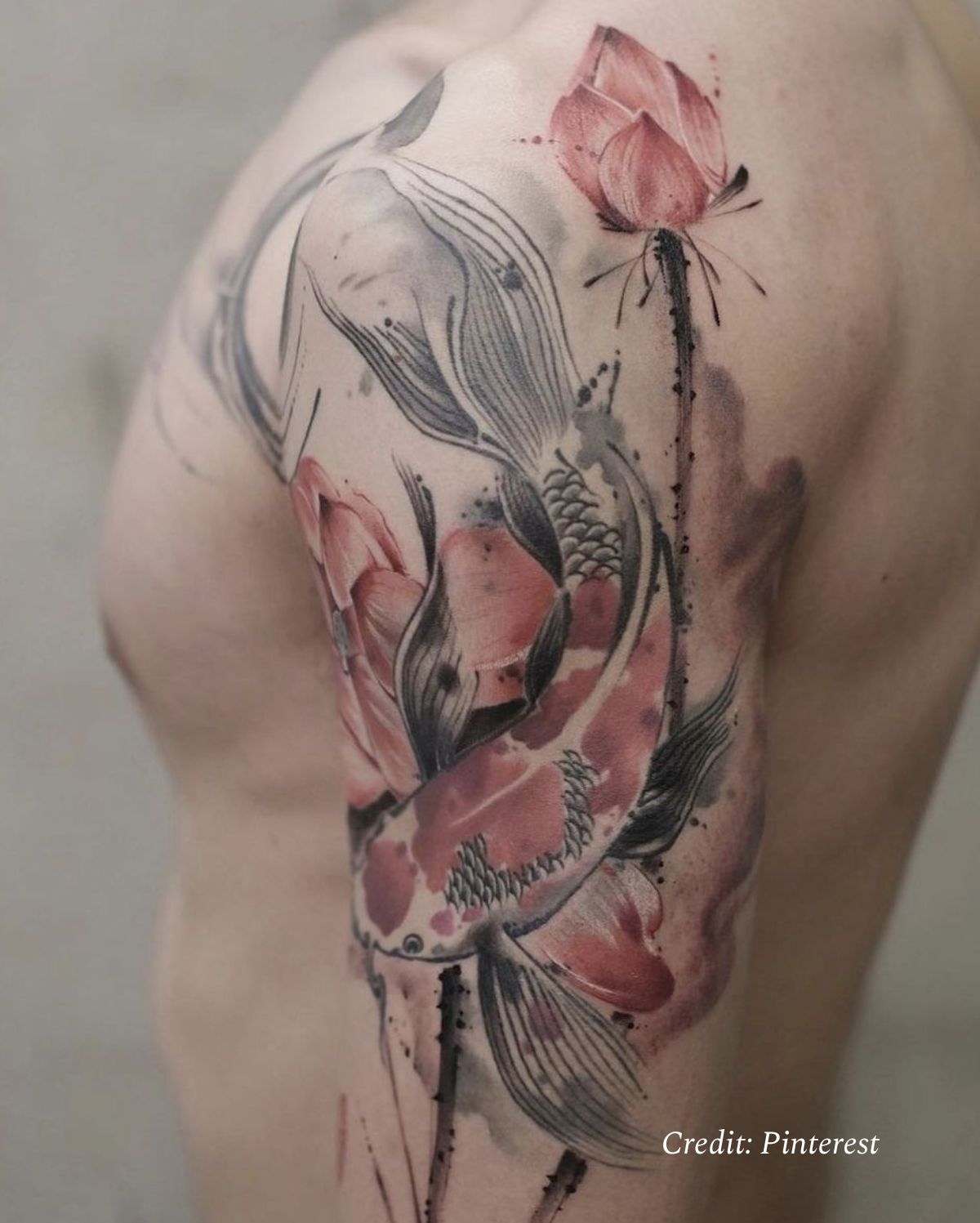
Waves, ripples and splash detail are not decoration in this design. They are the structural element that carries the eye from the koi to the lotus and holds a large piece together. On a sleeve or back piece, the water is usually what makes the composition work.
Small and fine line
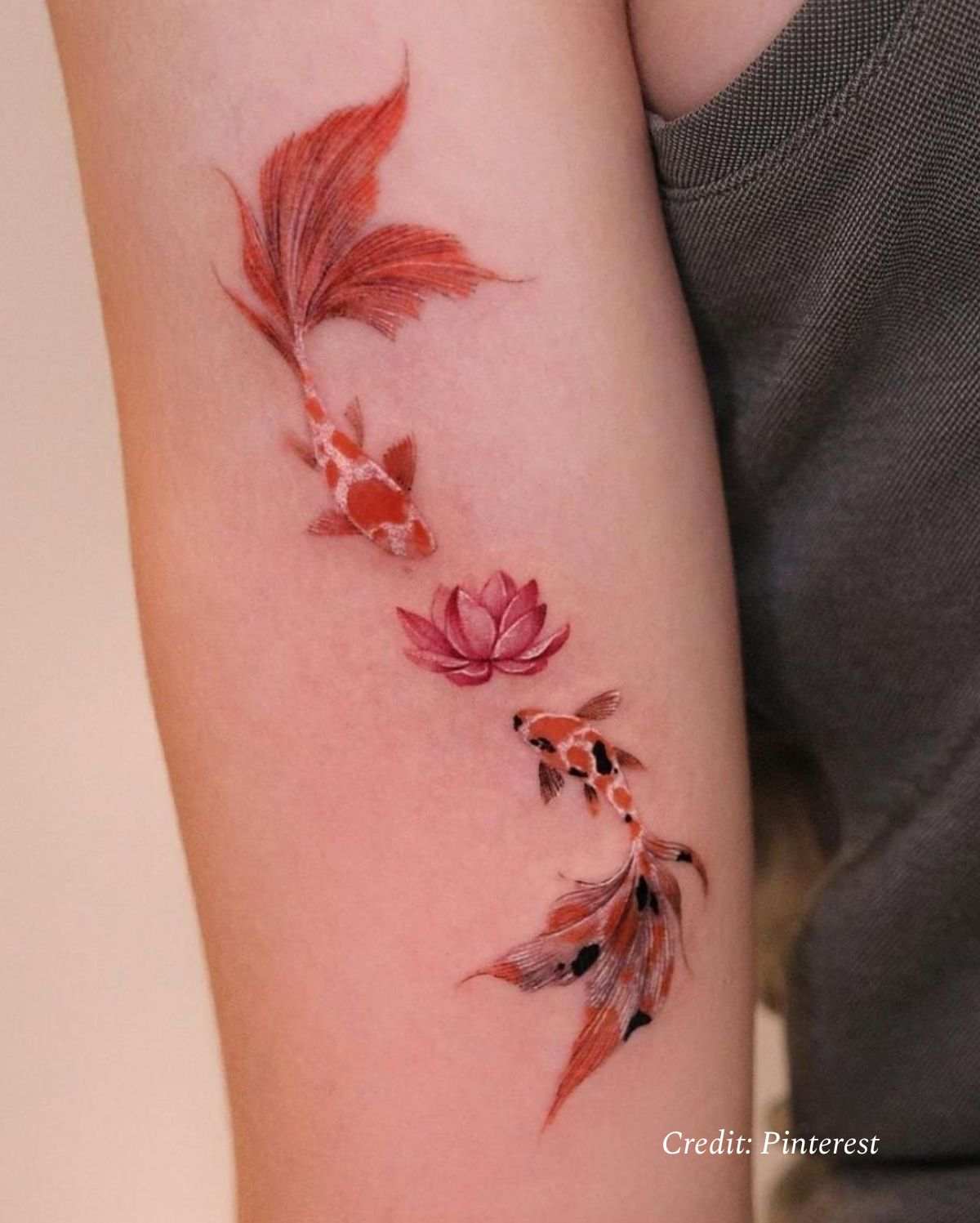
A simplified koi with a single lotus, drawn in clean linework. This is the version most travellers choose, and it is where the size rule below matters most.
How Big Does It Need to Be?
This design has more internal detail than most: koi scales, fins, lotus petal layers and water texture. Ink spreads slightly in the skin over the years, so detail that is tight on day one closes up later.
| Version | Minimum size | What you lose below it |
| Simplified koi outline plus one lotus | 7 to 8 cm | Fins merge into the body outline |
| Koi with visible scale detail | 12 cm | Scales close into a solid grey mass |
| Layered lotus petals with shading | 10 cm | Petal separation disappears |
| Koi, lotus and water composition | 15 cm | Elements compete instead of flowing |
| Full traditional sleeve or back piece | 30 cm and up | , |
The practical rule: simplify the design to fit the space rather than shrinking a detailed design into it. A clean 8 cm koi outline with one lotus ages well. A 8 cm attempt at a full scaled koi with water does not.
Placement
| Placement | Suits | Notes |
| Forearm | Medium koi with a single lotus | The limb’s vertical shape suits the koi’s directional form. Decide up or down deliberately. |
| Upper arm and sleeve | Full traditional compositions | The classic placement. Water flows around the arm naturally. See large-scale work. |
| Back | Large narrative pieces | The widest canvas, and the best place for a koi with a full background |
| Chest | Symmetrical or paired koi | Suits the yin-yang style double-koi arrangement |
| Thigh | Large detailed work | Spacious, comfortable to sit, easy to cover |
| Calf | Medium vertical compositions | Natural fit for an upward-swimming koi |
| Wrist or ankle | Simplified outlines only | Too small for scale or petal detail |
The Lotus in Vietnam
Worth knowing if you are getting this design in Vietnam: the lotus is the country’s national flower, and it carries local meaning distinct from its Japanese context. It appears throughout Vietnamese temple architecture, poetry and everyday imagery, standing for integrity and resilience.
That gives you a design choice worth raising at consultation. A koi rendered in Japanese traditional style pairs with a Japanese treatment of the lotus. A Vietnamese treatment renders the flower differently, often softer and more naturalistic, and sits closer to the Vietnamese traditional motifs used in local work. Neither is more correct, but mixing them without intention is the most common reason these pieces look slightly unresolved.
The short film below covers the lotus in Vietnamese symbolism and shows how the flower is rendered in tattoo work at our Hanoi studio, which is useful if you are deciding between a Japanese and a Vietnamese treatment of the flower half of your design.
Choosing an Artist for a Koi and Lotus Piece
This design asks for two different skills in one piece, which is why it goes wrong more often than simpler subjects.
- Japanese-style composition. Traditional koi work follows established conventions for how the fish, water and flowers relate. An artist who understands those conventions produces a piece that reads correctly rather than one that merely contains a fish and a flower.
- Soft floral shading. Lotus petals need smooth gradients and clean separation between layers. Hard-edged shading makes the flower look flat next to the koi.
- Healed portfolio in the right register. Ask specifically to see healed colour work if you want colour, and healed black and grey if you want that. They are different technical problems and strength in one does not imply strength in the other.
- Willingness to simplify. An artist who tells you your 8 cm idea needs fewer elements is protecting the tattoo. One who agrees to cram it all in is not.
Koi and Lotus Work at OCD Ink Studio
OCD Ink Studio designs every piece around the client’s own idea rather than working from flash, which matters for a composition this dependent on placement and flow. Specifics rather than generalities:
- Artists matched to the version you want. Colour and realism work goes to Mike, a colour and realism specialist; black and grey and fine line versions go to artists working in those registers. Founder Dino won Best of Day in the Black & Grey category at the Vietnam Tattoo Convention 2020. The full team is on our artist page.
- Healed results published openly. Colour work is judged properly only once settled, so our healed gallery shows pieces at six weeks and beyond rather than fresh.
- A two-year touch-up warranty, which is relevant for colour koi work where a highlight may want refreshing after healing.
- Two studios on the north-to-central travel route, in Hanoi’s Old Quarter and near Hoi An Ancient Town, with English-speaking consultation and a complimentary protective film for the first 72 hours.
A large koi and lotus piece is usually quoted per session. If you are on a fixed timeline, tell us how many days you have and we will scope a design that can be completed and healed within it. Send your references with a size and placement, or book directly in Hanoi or Hoi An.
FAQs
What does a lotus and koi fish tattoo mean?
Together they represent transformation through hardship. The koi stands for perseverance and the struggle upstream; the lotus for purity and growth emerging from difficult conditions.
Does the direction of the koi matter?
Yes. Upward means the struggle is ongoing, downward means it has been overcome. Because direction is read relative to your body, decide it together with placement rather than before it.
Should I get it in colour or black and grey?
Colour is traditional and carries more of the koi’s symbolism. Black and grey is more durable, since red and orange pigments fade faster under UV than black. If maintenance matters more than tradition, choose black and grey.
How small can a koi and lotus tattoo be?
Around 7 to 8 cm for a simplified koi outline with one lotus. Scale detail needs about 12 cm, and a full composition with water needs 15 cm or more.
How long does it take?
A small fine line version takes 1 to 2 hours. A medium forearm piece takes 3 to 5 hours. A sleeve or back piece runs across multiple sessions spaced 2 to 4 weeks apart. See how long tattoos take.
Is it appropriate to get this design as a foreigner?
Yes. Neither the koi nor the lotus is a restricted symbol, and both are widely tattooed internationally. What matters is understanding what you are wearing, which is why an artist who explains the symbolism before drawing is worth choosing.