Heart and Rose Tattoo: Meaning, Composition and Design Ideas
The heart and rose is one of the oldest combinations in Western tattooing, carried into the modern repertoire by traditional sailor flash. The heart stands for love, loyalty and emotional depth; the rose adds beauty, devotion and remembrance. Together they read as love that endures, or love marked by loss.
This design has a specific composition problem that most guides skip: a heart and a rose are both rounded, closed, similar-mass shapes. Put two of them side by side without deciding which one leads, and the piece reads as a confused blob rather than an image. This guide covers how artists solve that, plus the styles, sizes and placements that work.
What the Combination Means
| Element | Carries |
| Heart | Love, loyalty, emotional openness, grief when shown broken or bound |
| Rose | Beauty, devotion, remembrance; thorns add the cost that comes with love |
| Together | Enduring love, a tribute to someone, or love that survived something |
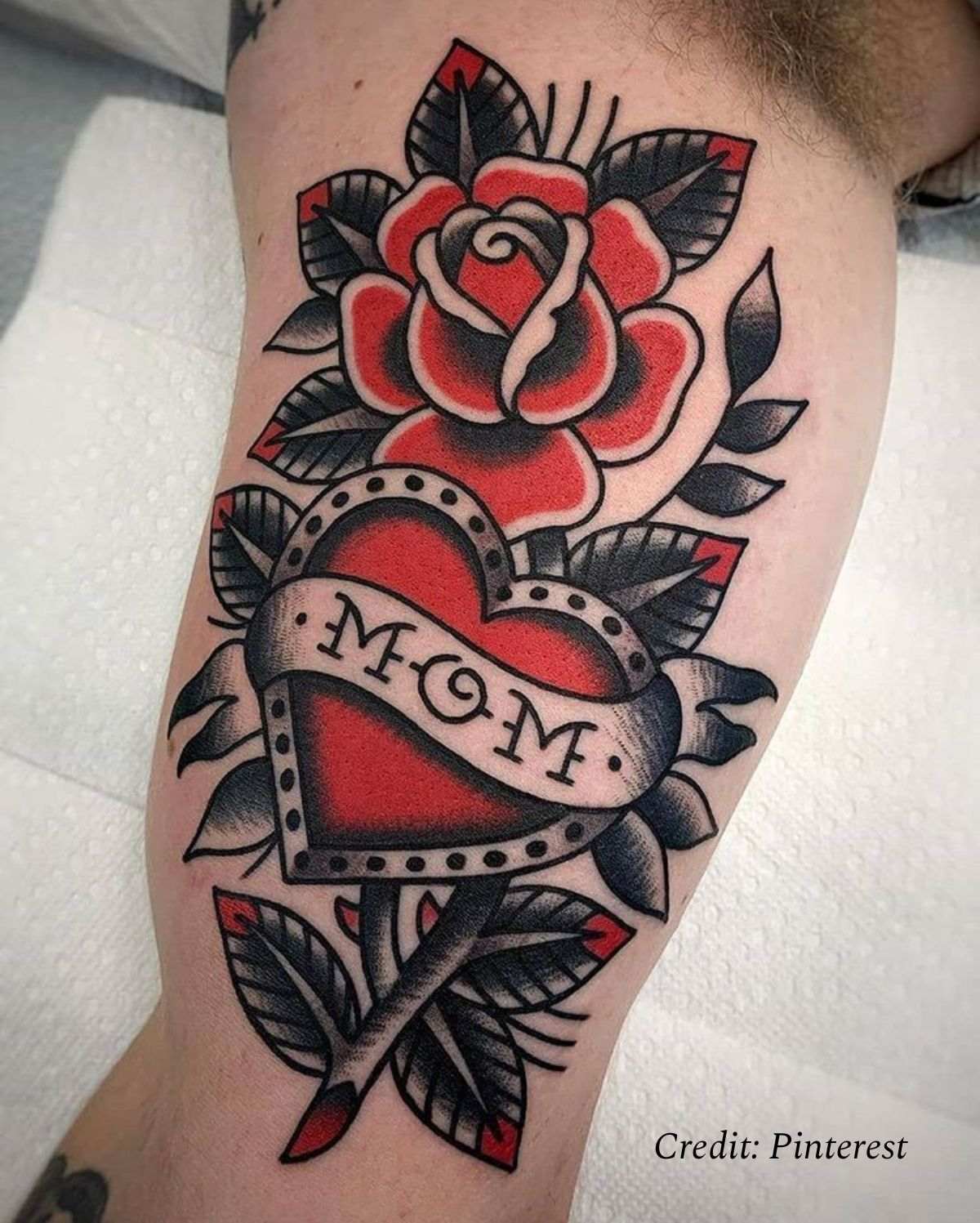
The pairing’s lineage matters for design choices. It comes from American traditional tattooing, where it was built with thick outlines and flat colour precisely so it would stay readable for decades on working people’s skin. That construction is still the most durable way to execute it.
Colour shifts the meaning. A red rose reads as romantic love, a white rose as remembrance or a new beginning, and a black rose as grief or farewell. Pairing a black rose with a heart is the most common memorial version of this design.
The Composition Problem, and Four Solutions
Both a heart and a rose are roughly circular, enclosed and similar in visual weight. Drawn as two separate objects of equal size, neither leads, the eye has nowhere to settle, and the tattoo reads as cluttered. Experienced artists resolve this in one of four ways, and choosing between them is the most useful conversation to have at consultation.
| Approach | How it works | Reads as |
| Nesting | The rose sits inside the heart’s outline | Love growing from within. The cleanest solution at small sizes. |
| Subordination | One element is clearly larger, the other supports it | A single subject with an accent, rather than two competing shapes |
| Piercing | The rose stem passes through the heart | Love and pain together. The stem gives the eye a line to follow. |
| Framing | Roses and foliage surround the heart as a border | A memorial or tribute piece. Needs the most space. |
The common factor is that something has to break the symmetry between the two shapes: a stem, a size difference, or one object containing the other. If an artist shows you a sketch with a heart and a rose simply sitting beside each other at the same size, ask them to rework it.
Style Approaches
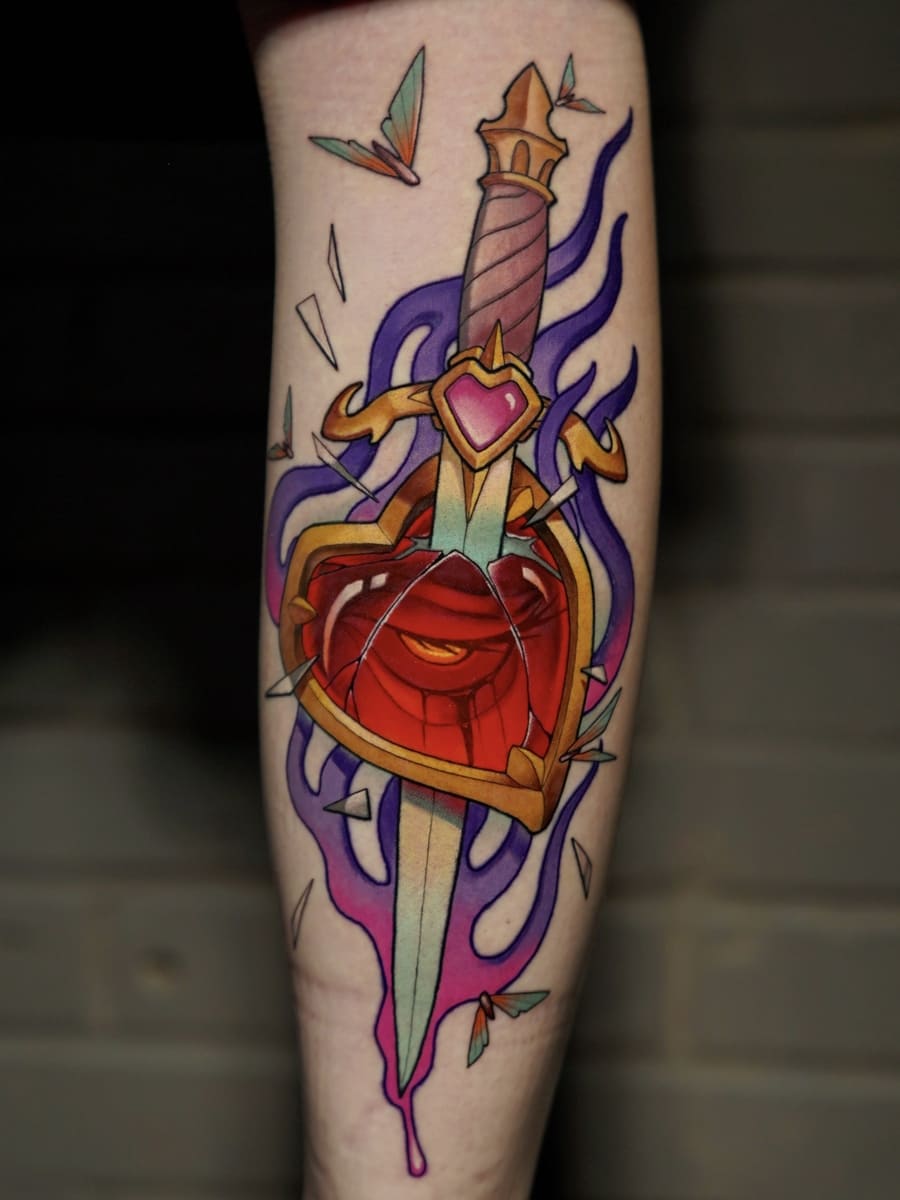
Traditional and neo-traditional
Bold outlines, flat saturated colour, strong black shadow. This is the style the design came from, and it remains the most durable construction in tattooing: thick lines and solid colour blocks have the most margin before spread becomes visible. A traditional piece done well looks essentially the same at twenty years as at two.
It also solves the composition problem by default, because traditional flash has established layouts for exactly this pairing, usually with a banner or stem breaking the two shapes apart.
Black and grey
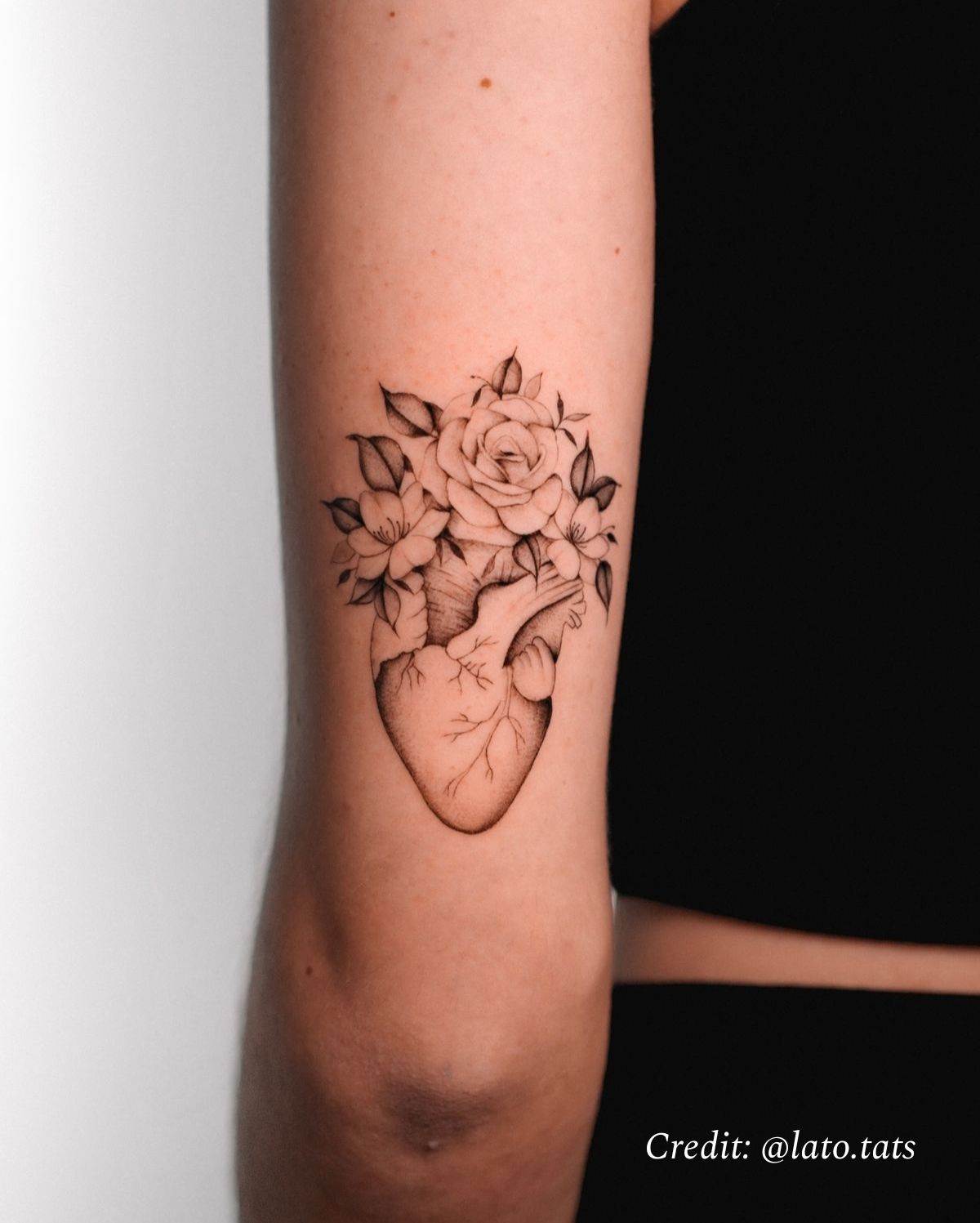
Shading and contrast instead of colour, with the rose rendered in petal depth and the heart given form through gradient. More subdued and more often chosen for memorial pieces. This is black and grey work and it needs an artist comfortable with smooth grey transitions, since banding is very visible on a shape as simple as a heart.
Colour and watercolour
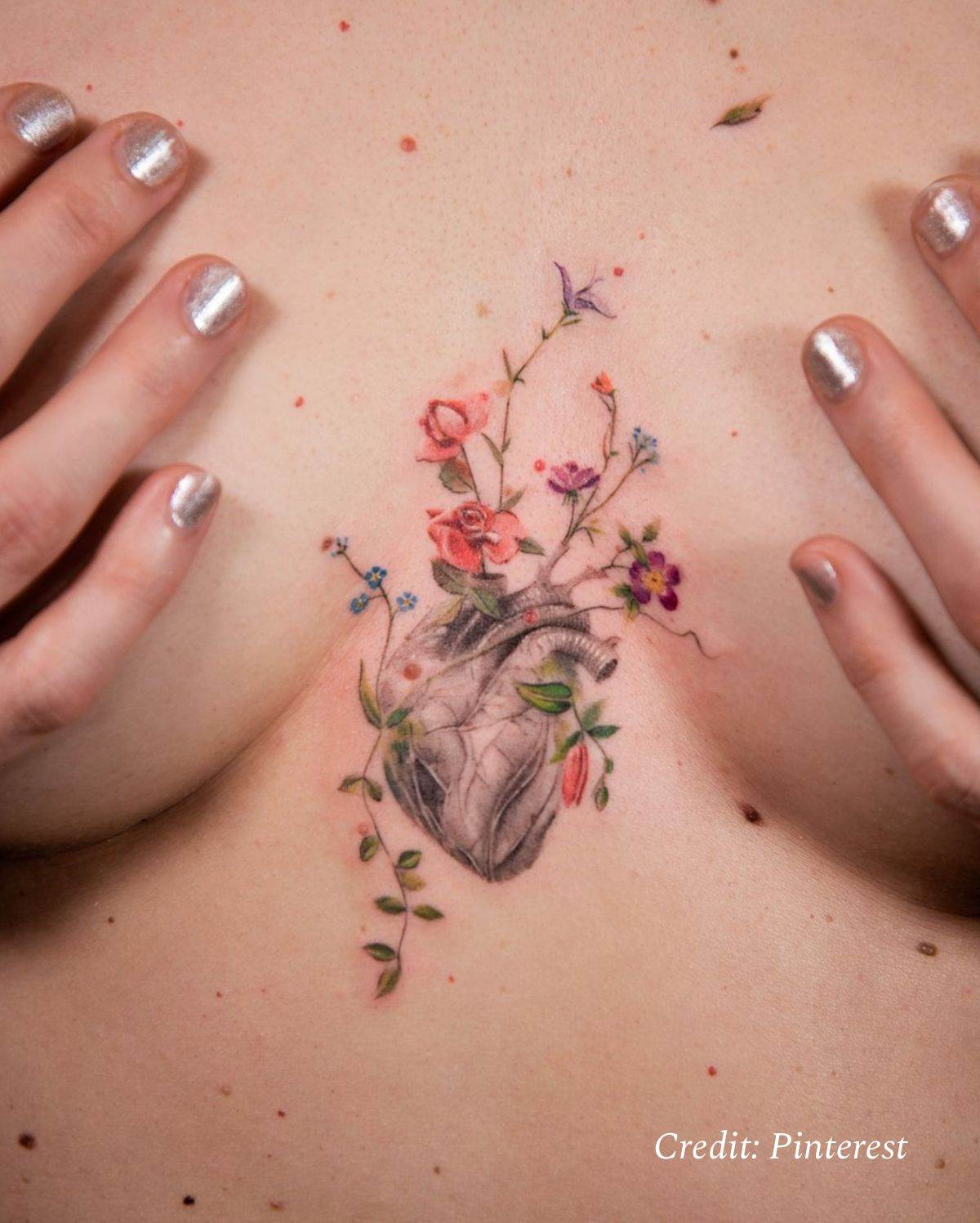
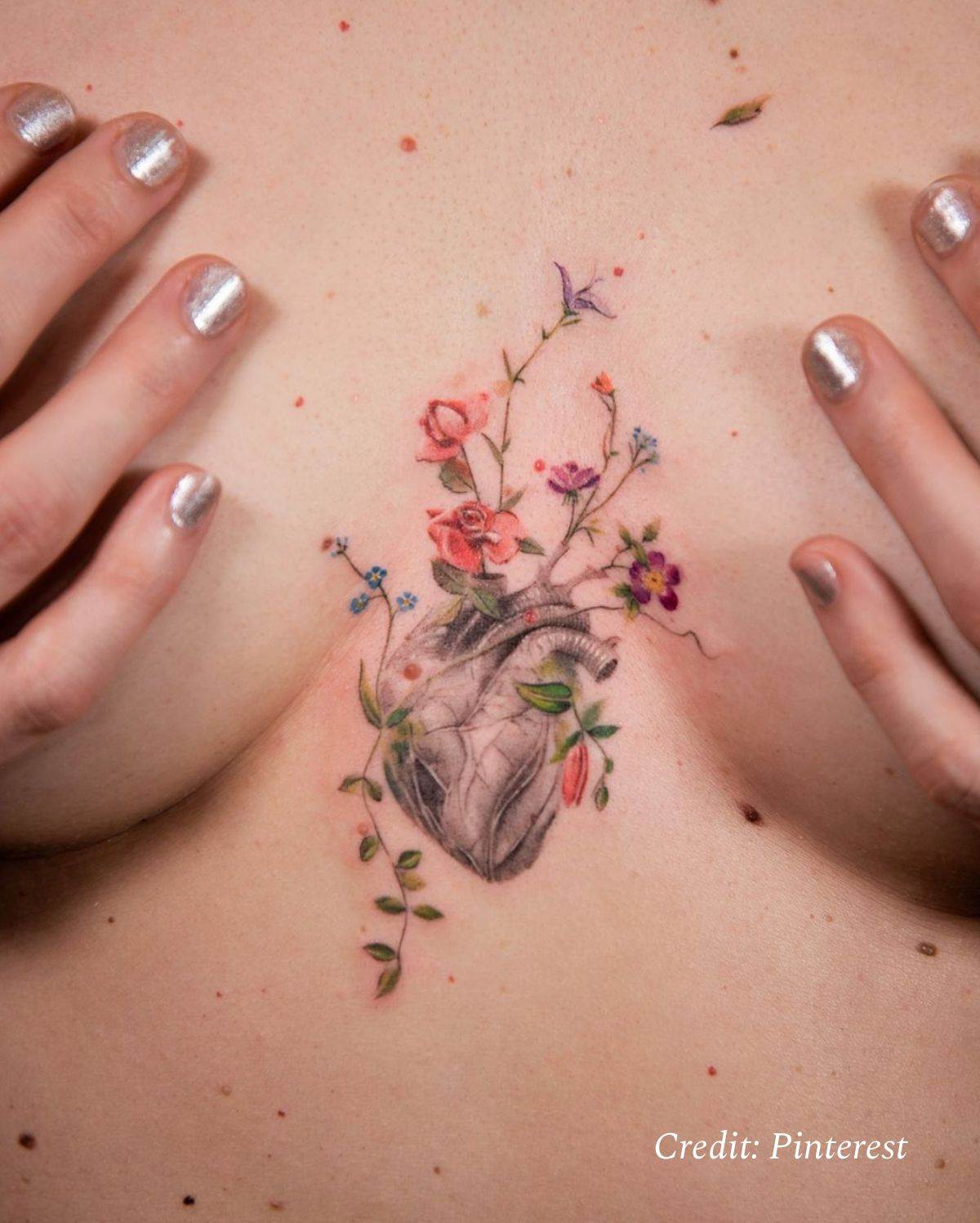
Vivid reds, blended transitions, sometimes with no outlines at all. Visually the most expressive version and the least durable one. Red pigment breaks down faster than black under UV, and an outline-free watercolour design has nothing holding its shape once the colour softens.
If you want colour, a compromise worth asking for: keep a fine black outline under the colour. It preserves the shape as the pigment ages, at the cost of a slightly less painterly look. See examples of colour work.

Fine line and minimalist
A simple heart outline with a single rose, drawn in clean thin linework. Popular as a first tattoo. This is the version where the nesting approach works best, because at small sizes two separate shapes have nowhere to breathe. See more fine line work.
How Big Does It Need to Be?
Because this is a two-element design, it needs more room than either element alone. A rose that works at 4 cm on its own needs the heart accounted for as well.
| Version | Minimum size | What fails below it |
| Fine line rose nested in a heart outline | 5 cm | Rose petals merge into the heart’s line |
| Rose with heart as an accent | 7 cm | The smaller element becomes unreadable |
| Heart pierced by a rose stem | 8 cm | The stem crossing point turns into a blot |
| Shaded or traditional pairing | 10 cm | Shading has nowhere to sit between the two shapes |
| With banner, script or a date | 12 cm and up | Lettering closes up; script needs its own space |
| Framed memorial composition | 15 cm and up | Foliage crowds the central elements |
Script is the element most often undersized here. A name or date added to a heart and rose needs its own breathing room, not the gap left over between the two shapes. If lettering matters to the piece, size the whole design around it. See lettering work for scale reference.
Placement
| Placement | Suits | Notes |
| Forearm | Most versions, including traditional and black and grey | Flat, visible, heals cleanly. The vertical shape suits a stem-and-heart layout. |
| Upper arm and shoulder | Traditional, larger shaded pieces | Comfortable, easy to cover, curved surface flatters rounded shapes |
| Chest, left side | Memorial and tribute pieces | The strongest symbolic placement. Sharper near the sternum. |
| Shoulder blade | Framed compositions with foliage | Room for a border without crowding |
| Ribs | Vertical stem-led designs | Elongated layouts follow the body’s line. Among the more painful areas. |
| Thigh | Large colour or traditional work | Spacious, comfortable, naturally sun-protected |
| Wrist or behind the ear | Nested fine line only | Too small for any two-element layout with shading |
| Side of finger | Not recommended | Highest-friction skin on the body; fine line work there fades fastest |
Why This Design Needs Custom Work
A heart and rose is one of the most tattooed combinations in the world, which means stock versions are everywhere and most of them have the composition problem described above. The difference between a generic piece and a good one is entirely in how the two shapes are resolved against each other and against your specific placement.
That is design work, not tracing. The short film below follows a piece from sketch through to finished tattoo at our Hanoi studio, which gives a realistic sense of how much happens before the needle touches skin on a custom symbolic design.
Choosing an Artist
- Ask to see the sketch before the stencil. With a two-element design, composition is where it succeeds or fails, and composition is decided on paper. An artist who sends a sketch for review and expects revisions is doing this properly.
- Match the artist to the style. Traditional, black and grey realism and fine line are three different disciplines. Strength in one does not imply strength in the others.
- Ask for healed work in that style. Fresh photographs tell you nothing about whether shading held or whether a fine outline stayed thin.
- If it is a memorial piece, say so. It changes the proportions, the style and often the colour an artist will recommend.
Heart and Rose Tattoos at OCD Ink Studio
OCD Ink Studio designs every piece from the client’s own idea rather than flash, and sends the sketch for review and revision before the stencil goes on, which is exactly where a two-element composition needs the attention. Four specifics:
- Artists assigned by specialisation. Traditional and neo-traditional work goes to artists in that register; colour and realism to Mike; fine line and graphic to Dino, who won Best of Day in the Black & Grey category at the Vietnam Tattoo Convention 2020. Full team on the artist page.
- Healed results published openly in our healed gallery, which is the only stage at which shading and outline quality can be judged honestly.
- A two-year touch-up warranty, relevant for colour versions where a red may want refreshing after healing.
- Two studios and a complimentary protective film. One in Hanoi’s Old Quarter, one near Hoi An Ancient Town, with English-speaking consultation and a second skin film for the first 72 hours.
Send your references with a size in centimetres, a placement, and any names or dates you want included, or book in Hanoi or book in Hoi An.
FAQs
What does a heart and rose tattoo mean?
Love that endures. The heart carries loyalty and emotional depth, the rose carries beauty and remembrance. Paired with a black rose or a broken heart, it usually reads as a memorial.
How small can a heart and rose tattoo be?
About 5 cm for a fine line rose nested inside a heart outline. Separate elements need 7 to 8 cm, and anything with shading or lettering needs 10 cm or more.
Which style lasts longest?
Traditional and neo-traditional, by a clear margin. Thick outlines and solid colour have the most margin before ink spread becomes visible. Outline-free watercolour ages the least well.
Can I add a name or date?
Yes, and it is common on memorial pieces. Size the whole design around the lettering rather than fitting script into leftover space, since small script closes up faster than any other element.
Where should I put it?
The forearm and upper arm suit most versions. The left chest is the strongest placement for a tribute piece. Avoid fingers, where fine line work wears quickly.
How long does it take?
A fine line nested design takes about an hour. A traditional or shaded 10 cm piece takes 3 to 5 hours. A framed memorial composition may need a second session. See how long tattoos take.