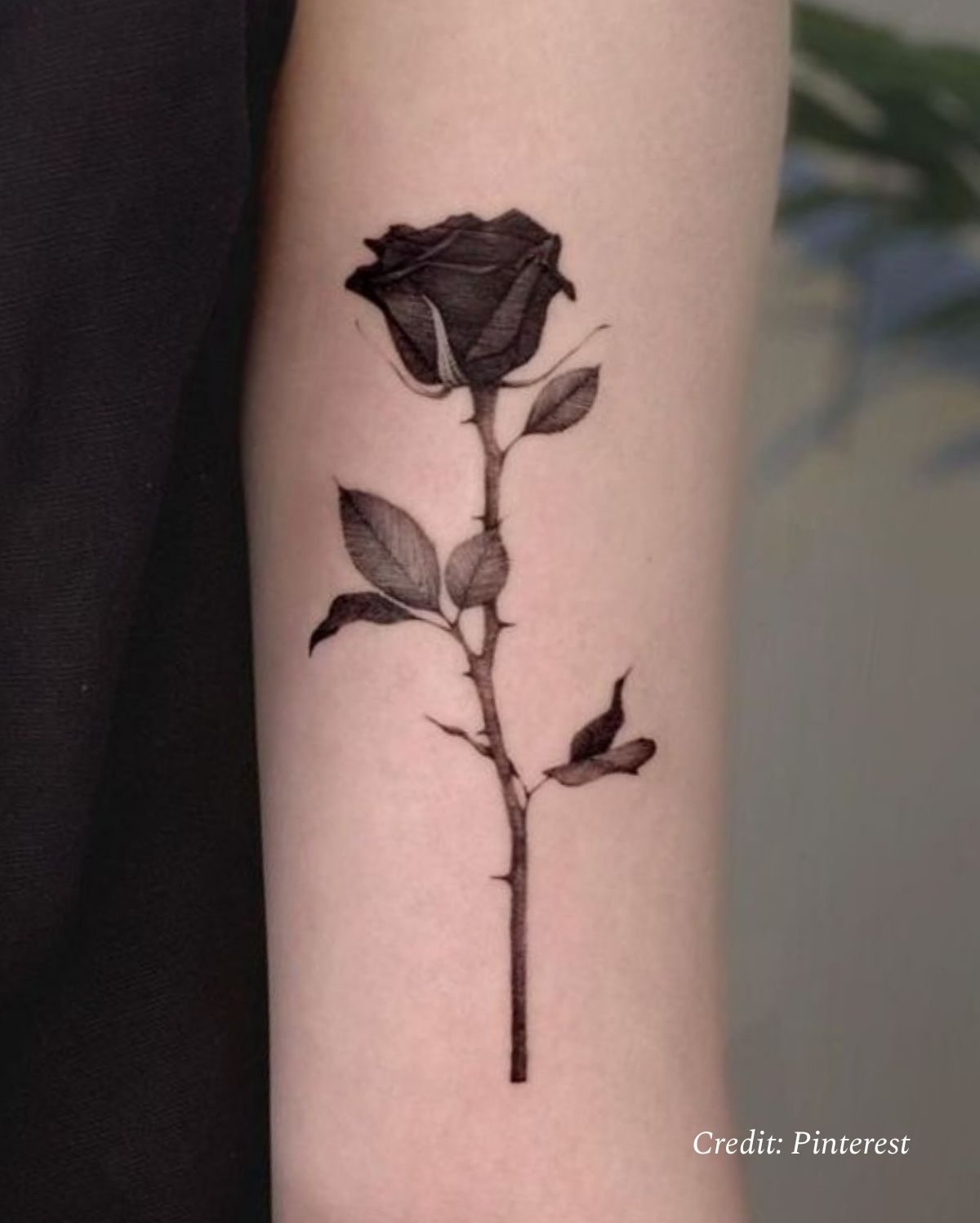
A black and white rose tattoo pairs two opposed meanings in one image: the black rose for grief, endings and strength through loss; the white rose for purity, renewal and beginnings. Together they read as balance between dark and light, or as one chapter closing while another opens.
There is one technical fact about this design that almost no guide explains, and it changes how you should brief your artist. In nearly every well-made black and white rose tattoo, the white is not white ink. It is bare skin. This guide covers why that matters, the four style approaches, and the size the design needs to hold its petal separation over time.
What the Two Roses Mean
| Element | Common meanings | Often chosen to mark |
| Black rose | Grief, farewell, rebellion, strength carried through loss | Remembering someone, closing a chapter, surviving something difficult |
| White rose | Purity, innocence, renewal, a fresh start | A new beginning, a birth, a clean break |
| The pair | Duality and balance: endings and beginnings held together | Transformation, or two connected people or periods |
The pairing reads clearly across cultures, which is part of why it travels well as a design. It is frequently chosen as a memorial piece, where the black rose carries the loss and the white rose carries what came after.
The White Is Negative Space, Not White Ink
This is the part worth understanding before you brief an artist.
White pigment is the least stable ink in tattooing. It sits under the skin rather than on it, so it is filtered through your own skin tone, and it is the first colour to break down under UV. White ink commonly yellows, greys or disappears within a few years, and on many skin tones it never reads as true white at all.
So a durable black and white rose is built the opposite way round. The artist works in black and diluted greys, and the “white” rose is created by leaving skin untouched and using the surrounding black to push it forward. The contrast does the work, not the pigment.
- Ask for negative space highlights rather than white ink highlights. A skilled artist will usually propose this before you do.
- White ink used sparingly as a final accent is a legitimate technique, but treat it as a finishing touch that may need refreshing, not as the structure of the design.
- Negative space needs planning at the sketch stage. Skin left blank cannot be added later, only cut into. This is why a design built on contrast has to be composed properly from the start rather than improvised.
The practical consequence: a black and white rose tattoo ages more like a black and grey piece than a colour one, which is good news. Done properly, it is one of the more durable designs you can commission.
Four Style Approaches
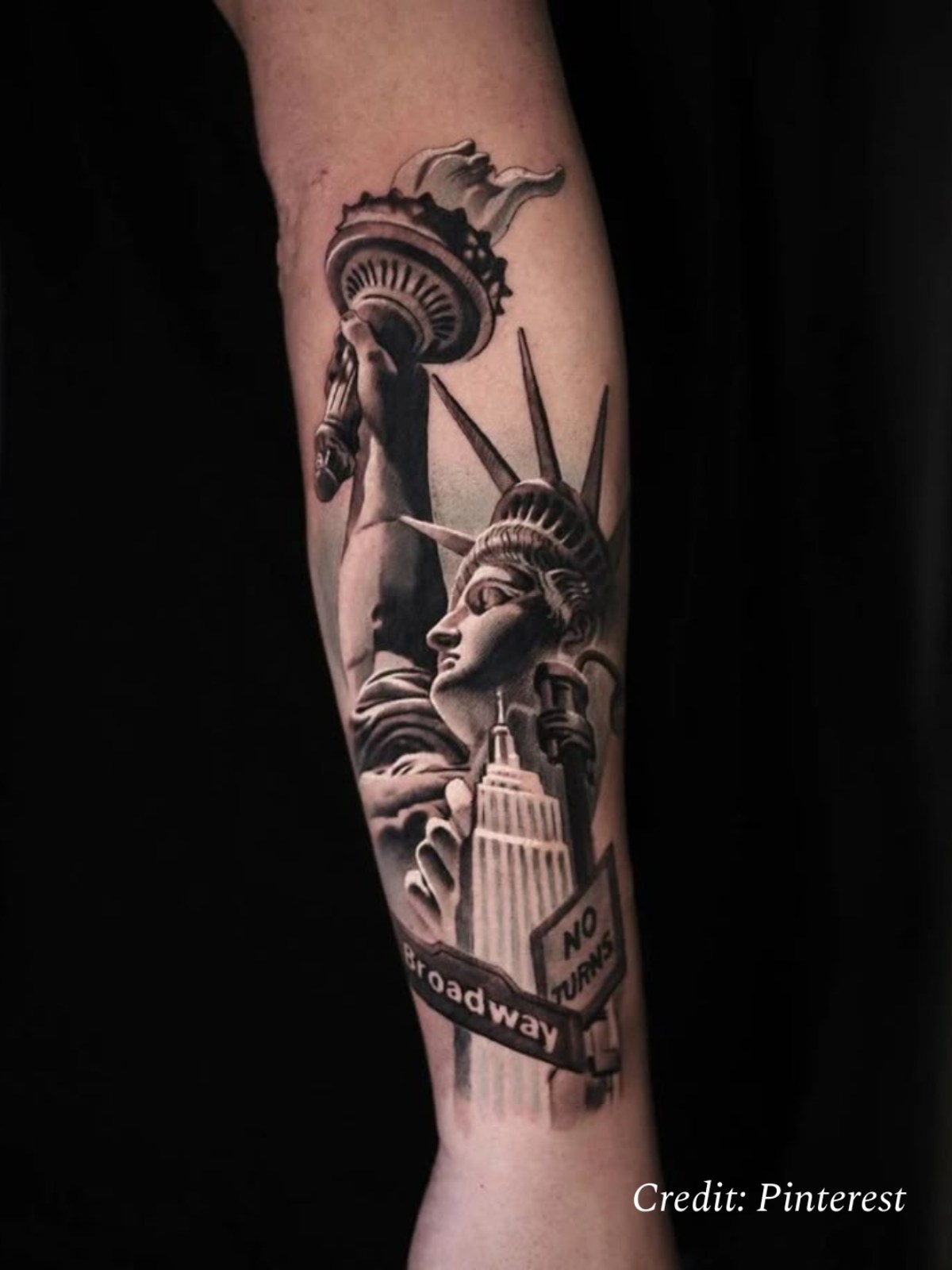
Realism
Every petal edge, curl and shadow rendered to look lifelike. This is the most technically demanding version, because a rose has dozens of overlapping surfaces and the illusion collapses if the shading between them is not clean.
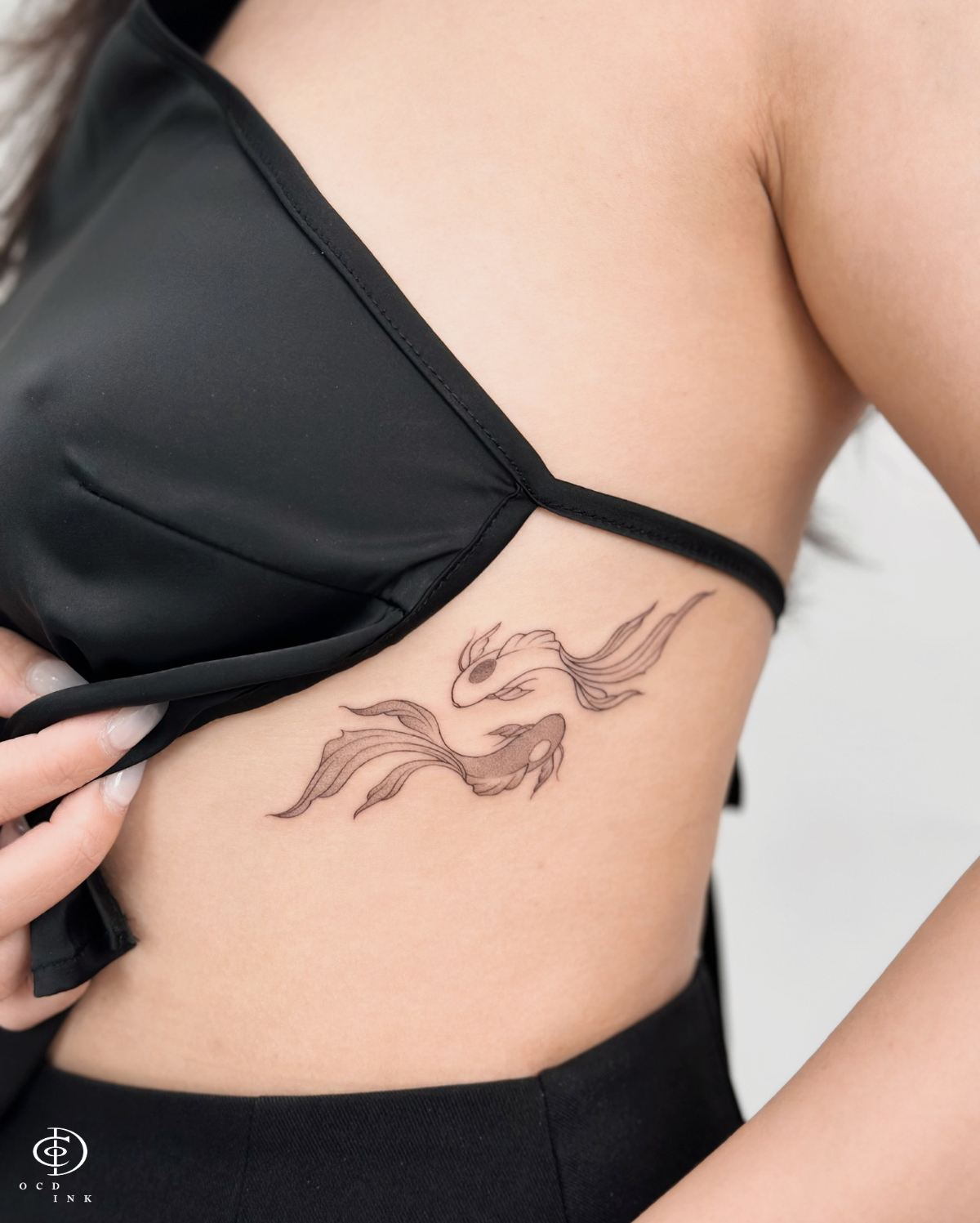
Fine line and minimalist
Clean outlines with little or no shading, letting the rose’s shape carry the design. Quicker, less painful, and the version that ages most predictably because there is no gradient to flatten. This is fine line work, which is unforgiving of inconsistent needle depth.
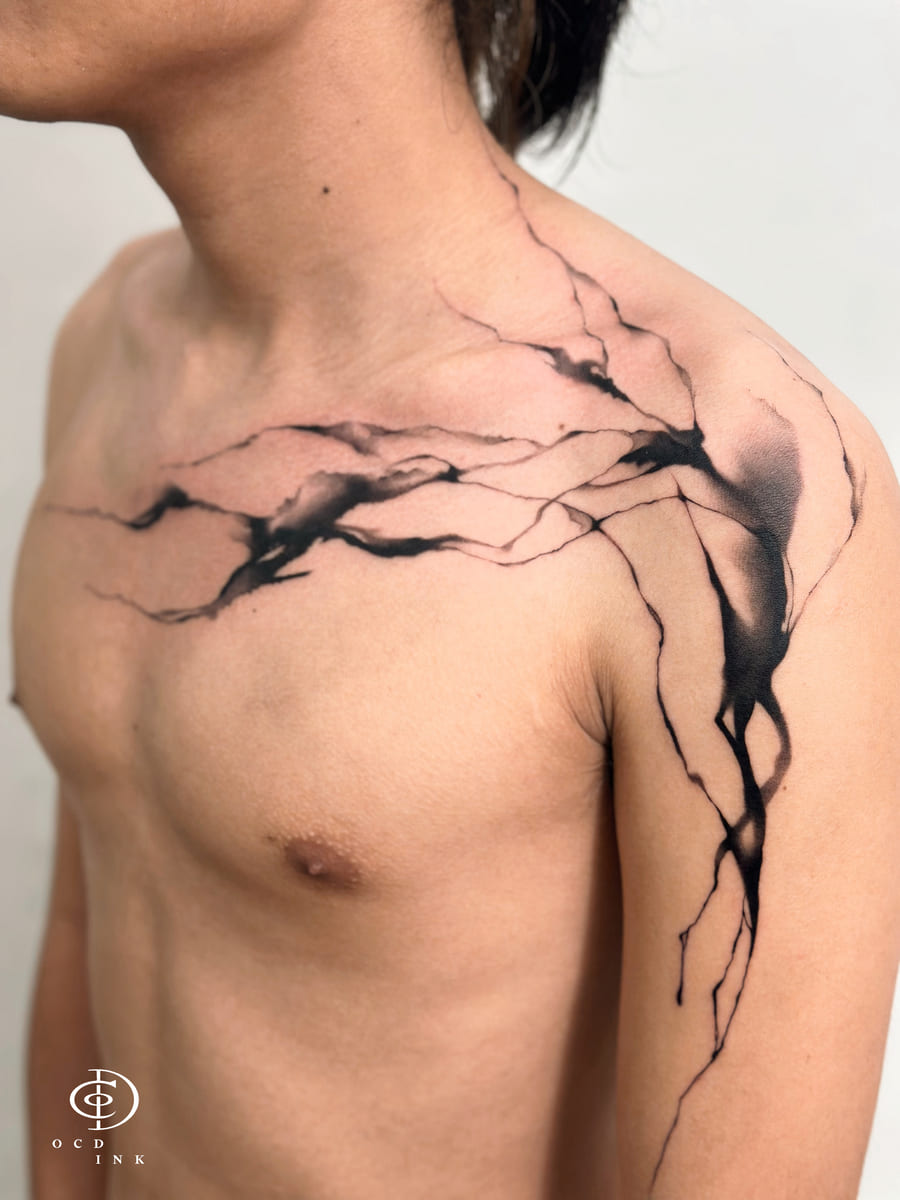
Blackwork
Heavy solid black with the rose cut out of it in negative space. The most dramatic version and the most fade-resistant, since solid black holds longer than any gradient. Best suited to people who want the piece to read clearly from across a room. See more blackwork examples.

Soft shading and abstract
Gradients and blurred transitions instead of hard outlines, giving a painterly result. Beautiful when healed well, but the least forgiving over decades: soft gradients lose contrast faster than defined lines, so this version benefits most from sun protection.
How Big Does a Rose Need to Be?
A rose is built from overlapping petals, and petal separation is the first thing lost as ink spreads slightly over the years. Too small, and a detailed rose gradually becomes a dark blob with a light edge.
| Version | Practical minimum | What closes up below it |
| Fine line outline rose | 4 cm | Inner petal curls merge |
| Shaded rose with petal depth | 7 to 8 cm | Gradients between petals flatten |
| Two roses, black and white pair | 10 to 12 cm | The two roses stop reading as distinct |
| Realism rose | 12 cm and up | Shading has nowhere to sit |
| Pair with stems, thorns or leaves | 15 cm and up | Supporting elements crowd the flowers |
Because a black and white pair needs two flowers to stay visually separate, it needs roughly double the space of a single rose. If you only have room for a small piece, one rose with negative space highlights carries the same idea better than two crammed together.
Placement
| Placement | Suits | Notes |
| Forearm | Single rose or a vertical pair | Flat, heals cleanly, very visible. Needs consistent SPF. |
| Upper arm and shoulder | Realism, larger pairs | Curved surface flatters the rose’s rounded form |
| Chest | Symmetrical black and white pairs | Natural symmetry suits a two-flower composition. Sharper near the sternum. |
| Back and shoulder blade | Large compositions with stems and foliage | The widest canvas. See large-scale work. |
| Thigh | Large detailed realism | Spacious, comfortable, easy to keep out of the sun |
| Ribs | Vertical stems and trailing designs | Elongated compositions follow the body’s line. Among the more painful areas. |
| Wrist, ankle, behind the ear | Single fine line rose only | Too small for a two-rose pair or any shading |
Protecting the Contrast
This design lives or dies on contrast, so the long-term care priority is different from a colour tattoo. There is only one thing that really matters: UV exposure flattens the difference between your darkest blacks and your lightest skin. SPF 30 or higher on a healed rose, every time it sees daylight, does more for it than any lotion.
Healing itself follows the standard timeline, covered in our guide to the tattoo healing stages, with the full routine on our aftercare page. If a shaded area looks patchy after healing, wait at least four to six weeks before judging it, then read when a touch-up is genuinely needed.
Choosing an Artist for Floral Black and Grey
Roses are one of the most tattooed subjects in the world, which means almost every artist has done them and standards vary enormously. Three checks that separate competent from excellent.
- Ask for healed floral work specifically. Fresh photos of a rose always look good. At six weeks you can see whether the petal separation held or whether the shading closed into a single mass. This is the check that matters most for this subject.
- Look at how they handle negative space. Confident use of blank skin is a strong signal. Artists who are unsure tend to fill everything and lose the highlights.
- Check smooth grey transitions. Banding, where the shading steps rather than flows, is the most common weakness in black and grey floral work and it becomes more visible as the tattoo settles.
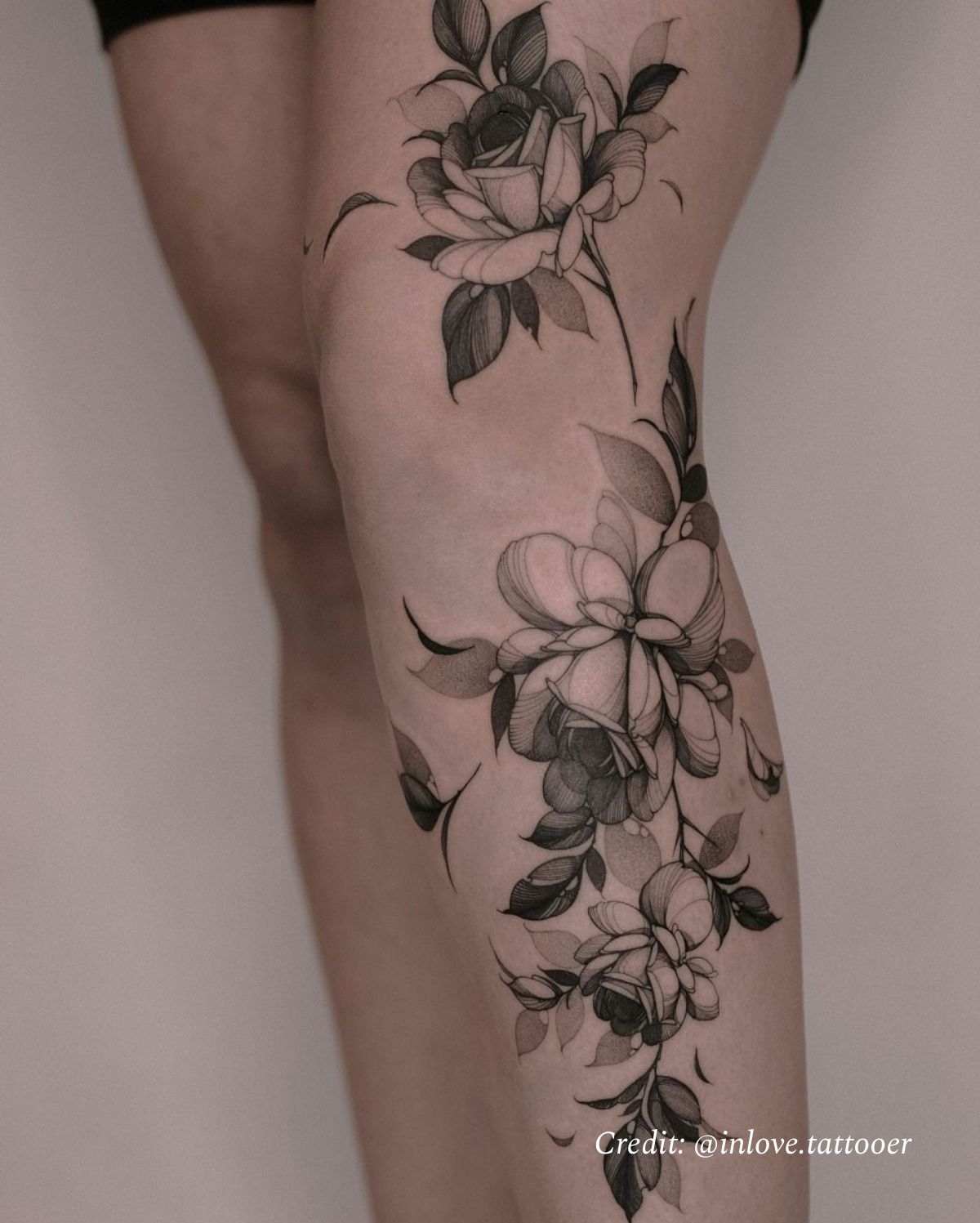
The piece below shows floral linework and shading by our founder Dino, which is useful for judging how petal separation and contrast are handled in practice rather than in a description.
Rose Tattoos at OCD Ink Studio
OCD Ink Studio designs every piece around the client’s own reference rather than working from flash, which matters for a rose because the difference between a generic one and yours is entirely in the composition. Four specifics:
- Artists assigned by register, not availability. Fine line and graphic roses go to a fine line specialist; realism and heavy shading go to Mike, a colour and realism artist. Founder Dino won Best of Day in the Black & Grey category at the Vietnam Tattoo Convention 2020, which is the exact discipline this design sits in. Full team on the artist page.
- Healed results published openly. Our healed gallery shows black and grey work at six weeks and beyond, which is the only stage at which shading quality can honestly be assessed.
- A two-year touch-up warranty, relevant here because shaded floral work occasionally wants a small amount of settling after healing.
- Two studios and a complimentary protective film. One in Hanoi’s Old Quarter, one near Hoi An Ancient Town, with English-speaking consultation and a second skin film covering the first 72 hours.
Send your reference with a size in centimetres and a placement and we will come back with an artist match and a quote, or book in Hanoi or book in Hoi An.
FAQs
What does a black and white rose tattoo mean?
Balance between opposites. The black rose carries grief, endings and strength through loss; the white rose carries purity and new beginnings. Together they often mark a transformation or a memorial.
Is white ink used in a black and white rose tattoo?
Usually not as the main element. White pigment is the least stable ink and commonly fades or yellows within a few years. Most durable designs create the white rose from negative space, using bare skin with black around it.
How small can a rose tattoo be?
About 4 cm for a fine line outline, 7 to 8 cm once shading is involved, and 10 to 12 cm for a black and white pair so the two flowers stay distinct.
Do black and grey rose tattoos fade quickly?
No. Black pigment is the most durable of any tattoo ink. What fades is the contrast, and that is driven almost entirely by UV exposure, so sun protection is the single most effective thing you can do.
Can a rose be added to an existing tattoo?
Often yes, and roses are one of the most common filler and linking elements in larger compositions because their organic shape bridges other subjects well. Bring photographs of the existing work to consultation.
How long does a black and white rose tattoo take?
A fine line single rose takes about an hour. A shaded 10 cm rose takes 2 to 4 hours. A realism pair with foliage can run to a full day or a second session. See how long tattoos take.